Getting Past the Average: Dental Marketing Numbers That Count
Averages hide more than they show. Here’s our 2026 data behind a few common dental marketing benchmarks, including what leads actually cost.
- 6 min read
- Oct 2026
-
 Stephen Taylor
You’ve probably seen figures like this before: “Expect to pay $150 to $300 per new patient lead.”
It’s a loose average. This kind of average is tidy and often useful. But does an average lifespan of a crown tell you enough to ignore it for 10 years? Does your average monthly tally of new patient calls tell you when to stop marketing?
Here’s a glimmer of what that $150–$300 range hides. Across the 180+ Google Ads campaigns we’ve run for dental practices in the last four months, there’s a 28x spread from lowest to highest cost per new patient lead. An average that covers both numbers isn’t describing either one.
We see averages governing too many decisions dentists (and their marketing companies) are making today. Benchmarks can be useful, but dental marketing averages by themselves don’t have much value. Which is why we make a point to share the real data behind the average as often as we can get it.
Don’t settle for average marketing numbers. Take a look at concrete ones, here in this article.
How many new patients should I get per month?
We hear this question from dentists almost every week. The answer depends on your services, the number of seats you keep open, your hours, your geography, and lots more. How long you’ve been in business matters too, but none of these should govern your expectations. We’ve seen startup practices win 100 new patients in a month, just as we’ve seen trusted, established practices struggling to get more than 10.
Your goals should be a lot more concrete than a 10–100 range.
To get beyond the average, here are some real figures we’ve heard from dentists this year.
| Practice type | Number of dentists | Location | Desired new patients per month |
|---|---|---|---|
| Pediatric | 2 | Suburban | 40 |
| General & Cosmetic | 1 | Major Metro | 40–50 |
| General | 3 | Rural | 135 |
| General, Cosmetic, & Restorative | 5 | Major Metro | 140 |
| General | 2 | Major Metro | 45 |
| General | 1 | Suburban | 30 |
One practice might only need 30 new patients per month, where another needs 75. So start with your own growth goals in mind, not the size of your neighboring practice’s parking lot.
What does it cost to get new dental patient leads?
A lead isn’t a patient in a chair. To translate marketing spend into actual collections, you’ll need to use a tool like PatientPulse™ or calculate how many leads become real patients. But the costs to get leads for new patients vary less than the number of new patients each practice needs.
The key to understanding this number is picking what type of lead you need, connected to a real service your practice offers. For instance, Invisalign leads tend to cost three or four times more than general dental leads.
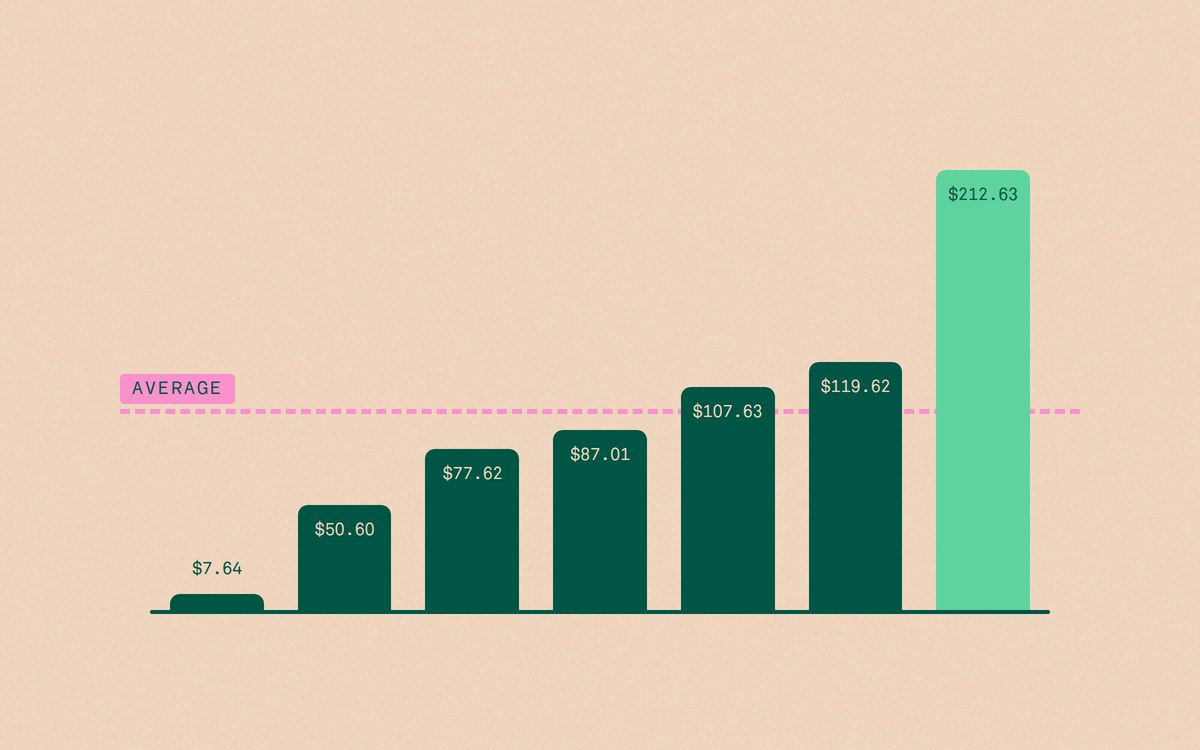
For Google Ads, the cost per lead (CPL) depends primarily on what you’re advertising. The following table illustrates this with figures from over 180 campaigns across a 120-day window this year.
| Campaign type | Cost per lead (CPL) |
|---|---|
| Branded | $7.64 |
| General “dentist” | $50.60 |
| Emergency | $77.62 |
| Dentures | $87.01 |
| Implants | $107.63 |
| Cosmetic | $119.62 |
| Invisalign | $212.63 |
Costs vary by the marketing channel you’re using as well. For instance, across nearly 50 campaigns for Meta Ads (Facebook and Instagram), we saw an average CPL of $58. Some practices saw performance as strong as $30 per lead, outpacing almost any Google Ads leads we’ve tracked. Even our average ($58) was well below the widely cited industry figure for dentists (about $77 per lead).
A lead isn’t a patient in the chair. And there are always variables, meaning this data doesn’t tell you whether you should spend the same amount or whether you’ll get the same results. But it does show you what other dentists have actually done this quarter, in this economy.
Get specific about which services you want to promote and how many leads you can convert to booked and in-the-chair patients. These two steps alone will remove most of the guesswork other dentists face where CPL is concerned.
Case in point: a :Delmain partner success story
A general practice in New Mexico wanted to attract more new patients but wasn’t ready to grow its marketing budget. :Delmain’s pay-per-click (PPC) team developed a new Google Ads campaign to maximize the existing budget. We restructured the practice’s ads to fit its core services, not special-case offerings the practice struggled to close. This shift cut the cost per lead from $105 to $26. We also increased lead volume from 13 to 54 in just the first month of the new campaign.
Costs to engage in dental marketing
We have nothing to hide where our pricing is concerned. If you want to know what it costs to do business with :Delmain, take a look at some clear-cut options here.
Whatever your goals are, we recommend starting your marketing work from a strong foundation, like a modern website that patients and AI can digest easily and an up-to-date Google Business Profile.
We also price around deliverables, not billable hours. This model motivates us to get the job done well on the first try, to move quickly, and to truly maximize your budget. And it protects you from common “pricing on request” paywalls.
That said, we have partners who up their ad spend (out-of-pocket, pass-through expenses) to accelerate their growth. That’s always an option. They also have total access to their ad accounts to see that their investments are going to new patients, not staffing fees or overhead for :Delmain.
Averages are useful. Real numbers are even better.
Marketing has a general problem with trust. Part of the problem comes from confusing or misleading metrics, or just from averages that mask the right strategy.
We’ve shared some of the numbers we can, but if you’re a dentist who’s serious about your practice’s marketing, your own data will tell you more than anyone else’s.
There’s a lot to be learned from data on similar practices to yours, in a similarly saturated market, offering similar services. The more it’s averaged and homogenized, the farther removed you are from the data, the less relevant it will be.
So when in doubt, look at your numbers first. And reach out if you’re ready for more than average marketing numbers.
Need help deciphering your marketing numbers?
Book a call to get free insights on how you can attract more of the right patients.
Our methodology
The cost-per-lead figures in this article come from :Delmain-managed ad accounts for dental practices: more than 180 Google Ads campaigns over a 120-day window in 2026, and nearly 50 Meta Ads (Facebook and Instagram) campaigns. Branded campaigns are those targeting searches for a practice’s own name. The new-patient goals in the first table come from conversations with dentists this year.
Because the time window and campaign mix differ, these numbers won’t match every :Delmain report exactly. For example, our dental advertising ROI benchmarks use practice-level medians over a 90-day window.
Common questions
How many new patients should a dental practice get per month?
It depends on your services, open chairs, hours, location and growth goals. Practices we spoke with this year wanted anywhere from 30 to 140 new patients a month. Start from your own growth goals rather than an industry average.
What does a new patient lead cost with Google Ads?
It depends mostly on what you advertise. Across more than 180 :Delmain Google Ads campaigns over a 120-day window, cost per lead ranged from $7.64 for branded campaigns and $50.60 for general “dentist” campaigns to $212.63 for Invisalign.
What do Meta ads cost per lead for dentists?
Across nearly 50 :Delmain Meta Ads campaigns (Facebook and Instagram), the average cost per lead was $58, and some practices saw leads for around $30. That is below the widely cited industry figure of about $77 per lead.
How much should a dental practice budget for marketing?
Common industry guidance puts dental marketing at 3% to 10% of annual revenue. Most :Delmain partner practices invest around $2,100 per month, and larger or growth-mode practices up to $4,000. That’s about $25,000 to $48,000 a year, or roughly 2.5% to 5% of revenue for a practice collecting $1 million. Start from your new-patient goal and your cost per lead, then check the total against a percentage of revenue.
About the Author
Stephen Taylor | Director of Marketing
Stephen has spent over a decade crafting and implementing marketing strategies across industries. His background includes agency and in-house roles across social media, email marketing, SEO, content marketing, CRM, and analytics. He was a two-time judge in the International Content Marketing Awards and frequently writes on the topics of digital marketing, books, and video game music.
Keep Reading

Best & Most Popular Dental Podcasts
Do you want to stay up-to-date on the latest dental industry trends, emerging technologies, methods for efficiently running your practice, and strategies to attract new patients? Dental podcasts offer a convenient way for dentists to stay informed and competitive.

20 Best Orthodontic Websites of 2026 & What They Got Right
Your orthodontic website can and should be your #1 source of new patients. How? By designing an orthodontic site that ranks highly in search engines, communicates what makes your practice unique, and impresses visitors. The best orthodontic websites are also designed to be mobile-first and very easy to navigate.

15 Best Pediatric Dental Websites of 2026 & What They Got Right
Parents have big expectations when entrusting their children with a pediatric dentist. The best way to make a good first impression and win them over? WOW’ing them with a well-designed pediatric website.

The Top 35 Books for Dentists of 2026
In the dynamic world of dentistry, staying informed is crucial. Wondering what books your peers are reading? We’ve got you covered with our list of the 31 best dental books for 2024, all highly recommended by dentists and dental experts.

The Truth About ADA Compliant Websites for Dental Practices in 2022
Here’s the truth — nothing you do to make your dental practice’s website ADA compliant can stop someone from suing you. If someone wants to file an opportunistic lawsuit, they can.

HIPAA Compliance For Dental Websites: Making Sense Of It All
How many emails do you get every week from an expert in HIPAA compliance wanting to sell you their services or a new piece of software? Many sales pitches focus on the fear of what might happen or what could happen if you don’t buy the latest HIPAA compliant solution.

Patients
Book your free intro call