Lost Organic Leads? Here’s What It Costs to Buy Them Back With PPC
As AI Overviews and richer results answer questions directly on Google, the “click inventory” gets tighter. Here, we break down what that means for dental practices, what it can cost to replace organic leads with PPC, and how to protect your visibility before you have to buy it back.
- 9 min read
- Feb 2026
-
 Hannah Moen
Key Points
- Your rankings might look fine on paper… but clicks can still drop. Google’s AI-heavy search pages are changing how people use them, especially patients who want quick answers without scrolling much.
- Trying to make up for lost organic leads with PPC? That gets pricey fast. And in dental markets where cost-per-click is already climbing, it can feel like you’re pouring money in just to stand still.
- Dentistry hasn’t been hit as aggressively by AI search changes yet, but it’s coming. And when there are fewer clicks to go around, competition naturally gets tighter. Everyone’s fighting for a smaller slice.
- The smartest move is tightening up both SEO and PPC. Make them work efficiently together, and build content that matches where someone is in their journey, whether they’re just researching or ready to book.
If traffic dips, what happens to your new patient flow?
Let’s think ahead and put a strategy in place before it becomes a problem.
You’re still showing up on Google, but you’re getting fewer clicks.
Not because patients stopped searching, but because search results are changing. AI answers and on-page summaries are giving people what they need before they ever reach your website.
That’s why you can’t treat SEO like a one-time project. Rankings move, and the results page keeps evolving. If you fall behind, the fastest way to make up the gap is usually paid search.
The problem is that replacing “free” organic traffic with PPC gets expensive fast.
Here, we’ll look at what happens when organic clicks decline, what it can cost to buy that traffic back, and why efficiency in both SEO and PPC matters more now that fewer clicks are available.
You didn’t lose demand, you lost clicks

Google is changing what shows up on the results page. AI answers, new layouts, and richer features are pulling attention away from the traditional blue links, even when your ranking hasn’t moved.
The problem is that many rank tracking tools still don’t reflect what users actually see, especially when AI elements reshape the page. So performance can look stable on paper while real engagement drops. Fewer clicks, fewer calls.
And even if search volume stays the same, AI reduces the number of available clicks. With less opportunity to earn traffic, both SEO and paid ads become more competitive. That’s why visibility today isn’t just about position, but about how many real chances you have to win the click.
What is a zero-click search?
A zero-click search is a search where the person gets their answer on the results page and never visits a website. Google’s AI Overviews, featured snippets, and map panels all produce zero-click searches. A zero-click search is not a ranking drop. Your position can hold steady while your clicks fall, which is why calls and booked appointments matter more than position alone.
The hidden cost of pausing SEO
SEO is like brushing and flossing. When you stay consistent, you prevent problems. When you stop, you end up paying for repairs later.
Rankings shift constantly. Competitors publish new pages, collect new reviews, and update their sites. Google changes what it rewards, and now it’s changing how it displays results too. So even if your position looks stable today, the landscape under it keeps moving.
This is where practices get caught behind the eight ball. They pause SEO because things feel “good enough,” then months later they’re wondering why organic traffic is down and why new patient flow feels less reliable. At that point, the fastest way to fill the gap is usually PPC, and that gap is expensive to replace.
The mistake isn’t “choosing SEO over PPC.” The mistake is treating SEO like something you can disengage from, then expecting paid search to clean up the mess later. Paid can help, but it’s not a cheap replacement for a healthy organic foundation.
PPC puts a price tag on lost organic traffic
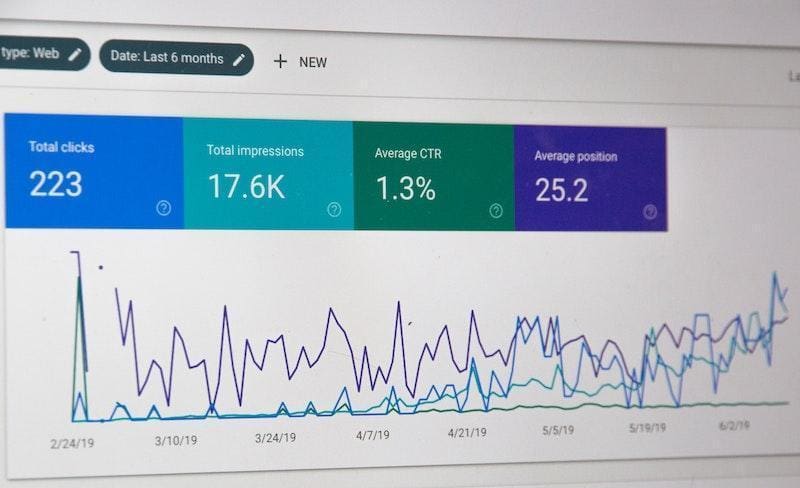
When organic traffic declines, it can feel vague. It’s hard to pinpoint the “why.”
Paid search makes it much clearer because very click comes with a cost.
If you used to get 500 organic clicks a month to your Invisalign page, and now you’re getting 350, PPC shows what it would cost to buy those 150 clicks back. Not the exact same patients, of course, but the same opportunity to get in front of someone searching.
And here’s the uncomfortable truth: Dentistry is a competitive market. The more competitive it is, the higher the cost per click, and the more expensive it becomes to make up for lost organic visibility.
What it can cost to replace lost organic leads (real dental benchmarks)
Here are real CPL ranges from dental campaigns:
- General dentistry leads: $31 to $90 per lead
- Implant leads: $197 to $516 per lead
Now imagine organic decline costs you 10 leads per month. Replacing that with PPC could look like:
- General dentistry: $310 to $900 per month
- Implants: $1,970 to $5,160 per month
That’s why the ROI conversation has changed. In an AI-driven SERP, the cost of replacing organic performance is trending upward.
Curious what replacing your organic leads would cost?
Book a call and we’ll break it down for your practice, then show you the highest-impact next steps for SEO and PPC.
Why dentistry is seeing less AI impact (for now)

You might be thinking, “I keep hearing about AI changing Google, but I’m not seeing a huge difference when I search for my own practice.”
That’s fair. Dentistry is a little different than many other categories.
A lot of dental searches are transactional, things like “dentist near me,” “emergency dentist,” or “Invisalign in [city].” For those searches, Google still leans heavily on ads and the traditional map results because patients are ready to take action.
And because dentistry is health-related, Google also tends to move more carefully with AI-generated answers. Accuracy matters more when someone is making a healthcare decision.
So yes, compared to some industries, dental is seeing a slower rollout. But that doesn’t mean the shift isn’t coming. It just means you have a window to prepare while the results page is still relatively familiar.
Why costs can still rise even if dental feels stable
Google only has so much space on the results page. If AI answers take up more of that space over time, there’s less room for the traditional results that drive clicks to your website. Fewer clicks available usually means competition gets tighter, both in organic and paid.
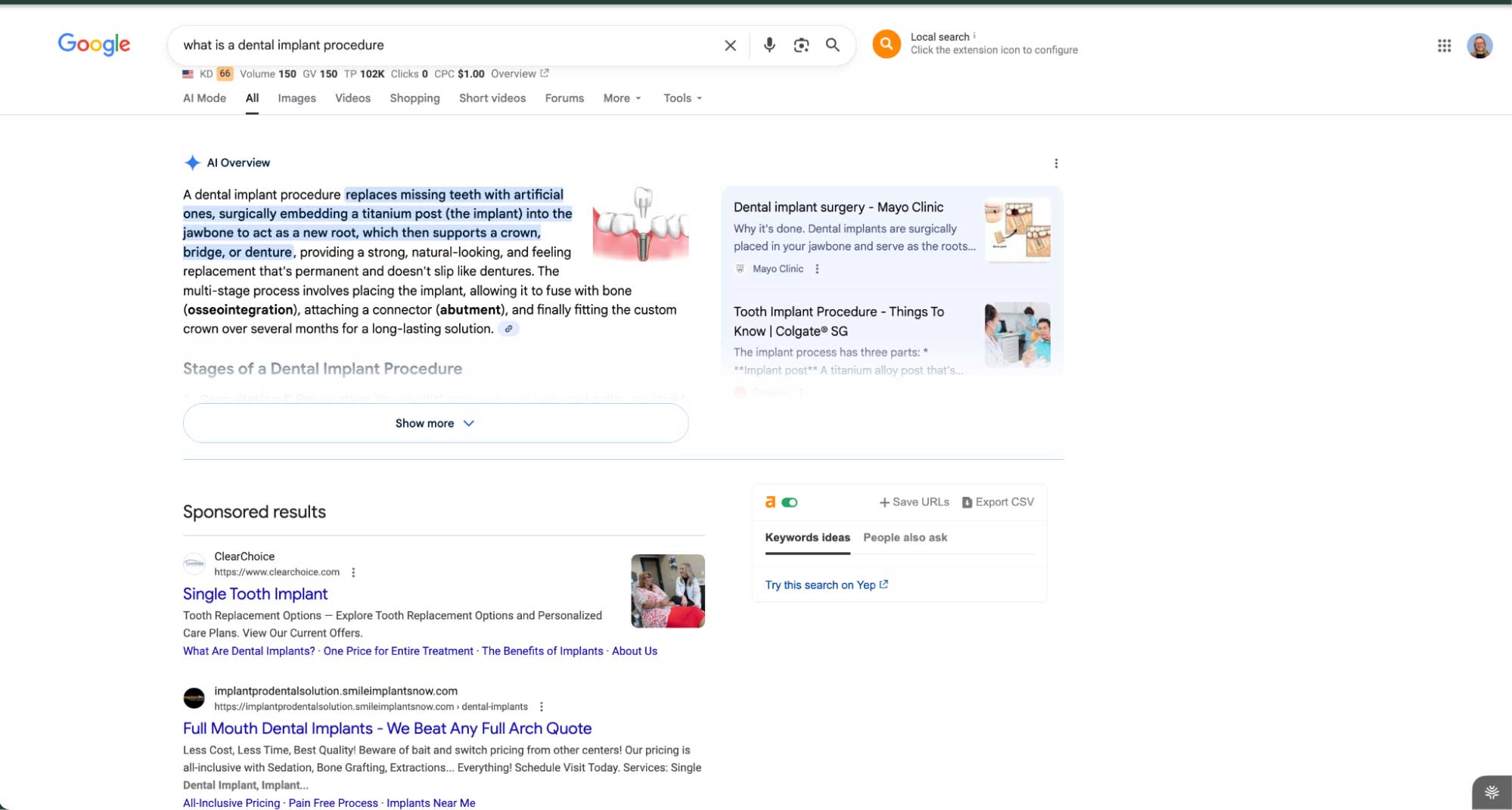
Not every search behaves the same anymore, and your marketing budget shouldn’t either. Think of Google search as three phases. The strategy changes depending on what the patient is trying to do.
That’s why CPCs can keep rising. As Google gets more confident showing AI answers in health-related searches, the results page can shift gradually. Practices end up paying more to capture the same attention they used to earn more easily.
The takeaway is not panic. It’s staying proactive. The cost of waiting often shows up later, when you are forced to spend more just to get back to where you were.
The “double squeeze” that makes PPC more expensive
There are two forces working against you at the same time:
- Less space above the fold: AI takes room, and ads get pushed into fewer high-visibility spots.
- Lower click-through rates: When patients get answers directly on Google, fewer people click. To maintain the same traffic, you often have to bid higher.
What smart practices do next
The goal is to stay efficient in both SEO and PPC, so you’re not forced to buy your way out of a traffic drop later.
Here’s what that looks like:
- Stay consistent with SEO. Keep publishing, improving service pages, and strengthening local signals. Even small monthly progress protects your baseline.
- Build content for the research phase. Patients don’t start with “book now.” They start with questions like cost, pain, timeline, and comparisons. Those optimized pages help you win earlier, before the “near me” search.
- Strengthen trust signals. Clear doctor bios, credentials, reviews, before-and-afters, and real photos all help patients and search engines trust what they’re seeing.
- Make your website convert better. Faster load times, clear calls to action, simple forms, and online booking matter more when every click is more valuable.
- Run paid search with less waste. Tight targeting, strong landing pages, clean tracking, and ongoing testing help you keep CPLs under control as CPCs rise.
When clicks are harder to earn, the practices that win aren’t the ones spending the most, but the ones making every visit count.
This is why matching your strategy to the search phase matters.
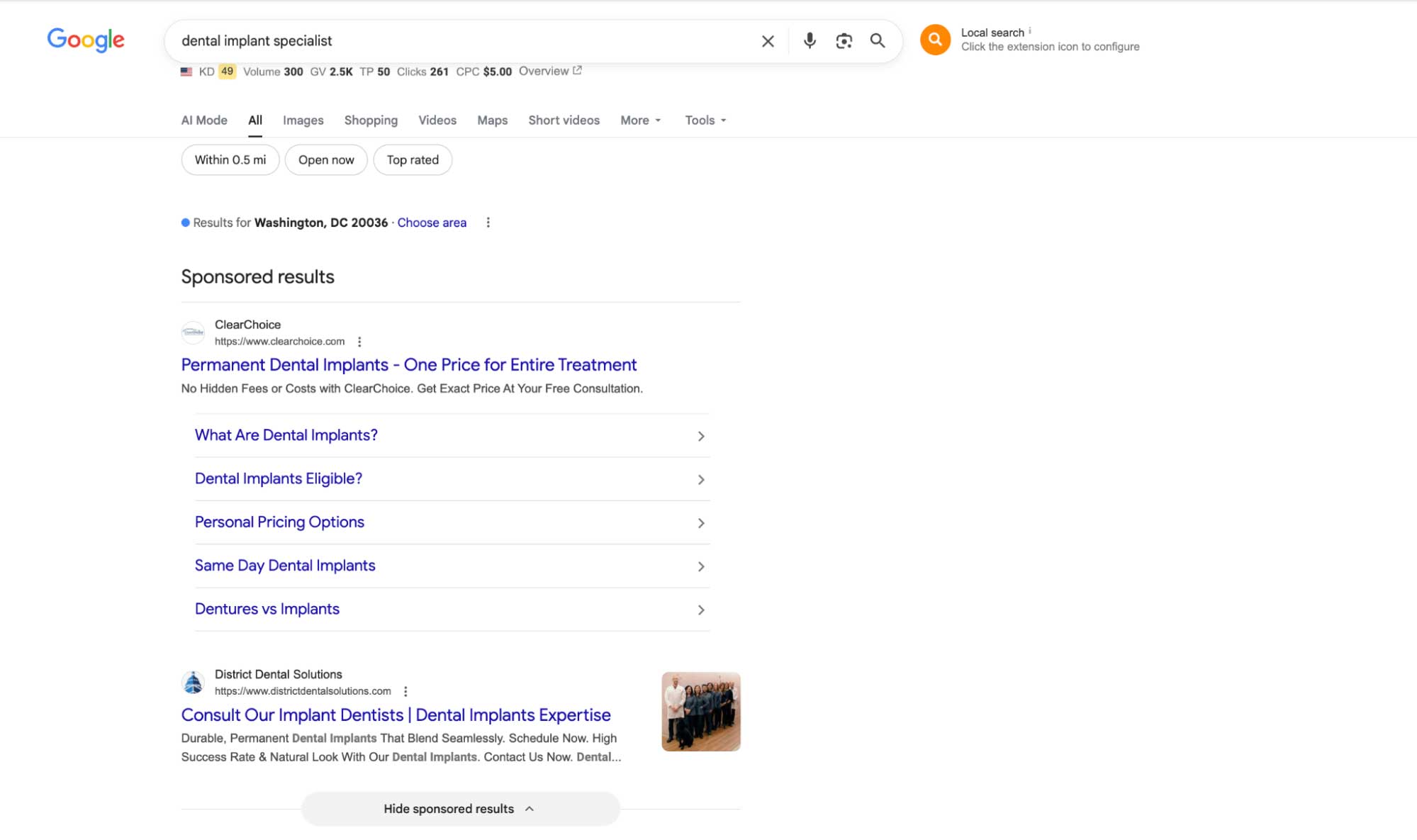
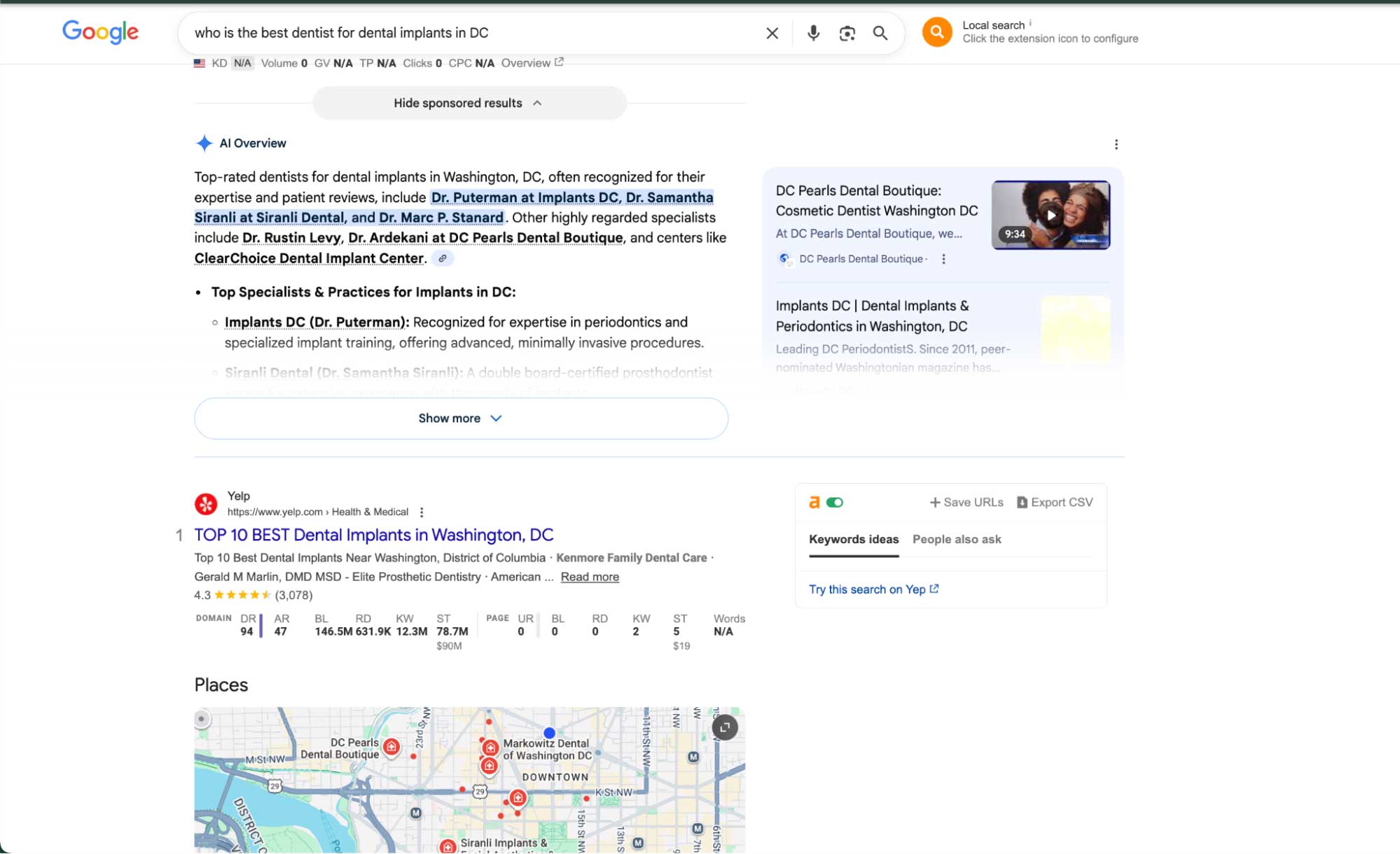
Here are three common SERP layouts we’re seeing, and what they mean for clicks and costs.
Example 1: Conversion search (Service + location). Ads dominate above the fold. AI is minimal today, but this is the most expensive real estate on the page and it gets tighter as layouts evolve.
Protect your visibility now, so you’re not paying more later
Organic traffic is getting harder to earn. When clicks shrink, every missed opportunity becomes more expensive to replace.
Don’t wait until traffic drops to take action. Protect what’s already working, continue refining SEO and PPC, and stay ahead as search keeps evolving.
If you want to understand what this shift means for your practice, and what it would cost to replace lost organic traffic with paid clicks, we can help you map that out clearly.
Common questions about Dental PPC optimization
How much does it cost to replace lost organic leads with PPC?
It depends on your services and how competitive your market is. Real dental benchmarks put general dentistry leads above $150 each and implant leads at $197 to $516 each. If organic decline costs you 10 leads a month, replacing them with paid search could run roughly $1500 for general dentistry or $1,970 to $5,160 for implants.
Is dentistry affected by AI search changes yet?
Dentistry is seeing a slower rollout than many other categories. Many dental searches are transactional, like “emergency dentist” or “Invisalign in [city],” where Google still leans on ads and map results. Because dentistry is health-related, Google also moves more carefully with AI-generated answers, which gives practices a window to prepare while the results page stays familiar.
What are the best practices for optimizing dental PPC campaigns?
Can you help me improve my dental practice's PPC ads to attract more patients?
Should I pause SEO and rely on PPC instead?
Pausing SEO is risky. Rankings shift constantly as competitors publish new pages and Google changes what it rewards. A search results position that looks stable today can erode within months. When that happens, the fastest way to fill the gap is usually PPC, and that traffic is expensive to buy back. Staying consistent with SEO protects your baseline at a lower long-term cost.
Why is my dental practice getting fewer clicks even though rankings look stable?
Google is changing what appears on the results page, with AI answers and richer features pulling attention away from traditional blue links. Your ranking position can hold steady while real engagement drops, because patients get what they need before reaching your site. Rank tracking tools do not typically reflect what users actually see. Performance can look fine on paper while clicks and calls actually decline.
How can dentists keep PPC costs under control as clicks get scarcer?
Run paid search with less waste by using tight targeting, strong landing pages, clean tracking, and ongoing testing. Pair that with consistent SEO and content built for the research phase, so you win patients earlier in their journey, before the high-cost “near me” search. When clicks are harder to earn, the practices that win are the ones making every visit count, not the ones spending the most.
What should I look for when choosing a dental PPC agency?
How does :Delmain optimize PPC campaigns for dental practices?
Keep Reading

Dental SEO Made Simple: A Step-by-Step Guide for 2026
Have you ever wondered what it means when someone says, “That’s great for dental SEO”? Well here’s the simple translation: “That strategy can help push your website up higher in search engine results, drive more traffic to your website, and get more new patients through your door.”

How to Maximize ROI with AI-Driven Dental Marketing in 2025
Digital MarketingHow to Maximize ROI with AI-Driven Dental Marketing in 2025Stop guessing with AI. This guide shows you how to use AI...
Dental PPC Strategies: How to Improve Your Google Ads
Organic search engine optimization will only get you so far. To attract new patients and grow your practice, you need to take a holistic approach to your digital marketing — that includes PPC for dentists.

Maximizing Your Marketing ROI: Calculating the Lifetime Value of a Dental Patient in 2025
As a dental practice owner, you feel pressure to provide outstanding care to your patients, pressure to keep your team engaged and doing their best work, and pressure to pay the bills.

Patients
Book your free intro call