26 Dental Website Ideas for 2026 (Backed by 100+ Top-Performing Practices)
Beyond aesthetics, a great dental website should book patients. In this guide, we break down 26 essential website ideas that help your practice stand out, build trust, and convert more visitors into scheduled appointments.
- 19 min read
- Feb 2026
-
 :Delmain Team
Key Points
- A modern dental website is much more than an online brochure. It must function as a booking engine.
- Mobile speed, online scheduling, and clear CTAs directly impact conversion rates.
- Content-rich service pages, structured data, and AI-optimized formatting improve visibility in search and AI results.
- Trust signals like reviews, team bios, before-and-after photos, and transparent pricing increase case acceptance.
- The best-performing practices treat their website as a growth system (not a one-time project.)
Is your website helping you grow?
Let’s build something that works as hard as you do.
Think about the last patient who said, “I found you online.”
Before they booked, they compared you to other practices, scanned your reviews, looked at your photos, and decided whether you felt trustworthy.
That’s 2026. Your website is doing a full shift before your team ever answers the phone.
Your job is simple: make it easy for the right patient to choose you. Here are 26 website ideas top practices are using to stand out and turn more visitors into scheduled patients.
1. Mobile-first, lightning-fast design
In 2026, speed and mobile experience are not bonus features. They’re part of how you get chosen. Google rewards fast sites, and patients do too.
Why it matters
- Most dental website traffic comes from mobile, so your phone experience is your main experience.
- A slow load time quietly kills calls and booking clicks, even when your marketing is working.
- Fast, clean mobile design builds instant trust, which matters in a high-anxiety category like dentistry.
How to do it
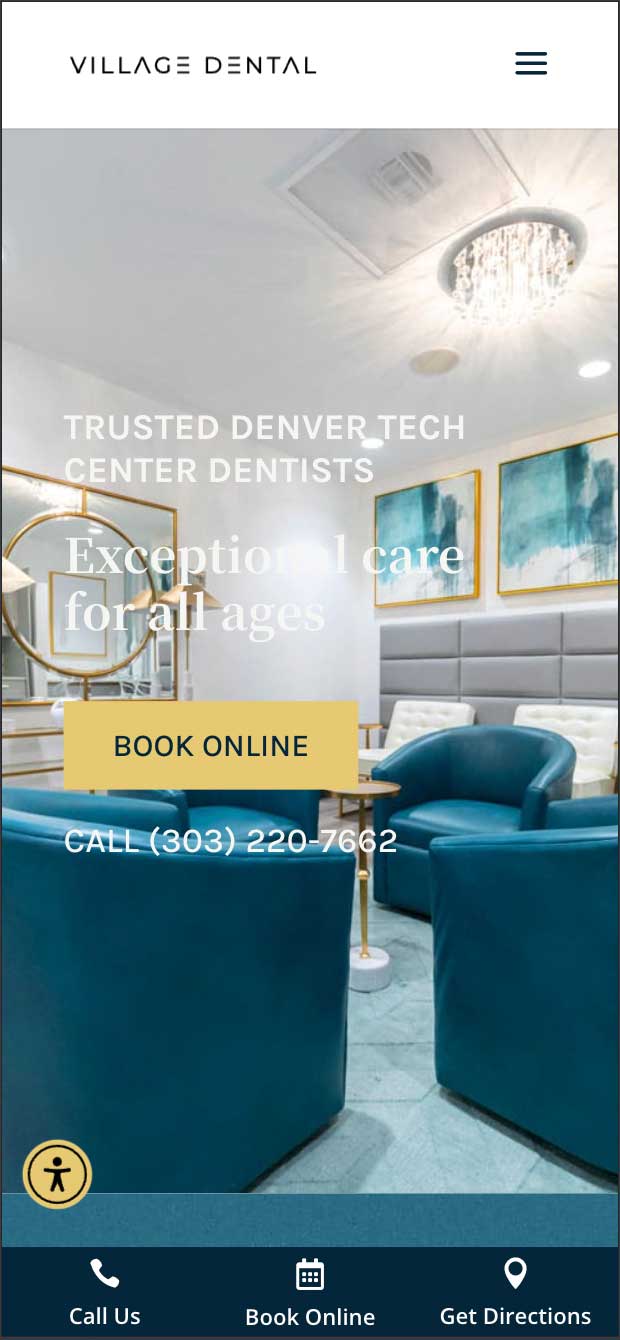
- Design for mobile first, then scale up to desktop, not the other way around.
- Aim for a load time under 2 seconds by compressing images and cleaning up code.
- Keep mobile pages simple: clear headline, one main CTA, easy-to-tap buttons, no tiny text.
- Test your site on real phones.
2. Online booking and digital patient forms
Most patients don’t want to “call when you open.” They want to book at night, on a lunch break, or in between meetings. If your website forces them to wait, you create friction, and friction loses patients.
Why it matters
- Online booking turns interest into action while motivation is high.
- Digital forms reduce front-desk back-and-forth and speed up the first visit.
- Fewer steps usually means more scheduled appointments.
How to do it
- Add a HIPAA-compliant online booking tool that’s easy to use on mobile.
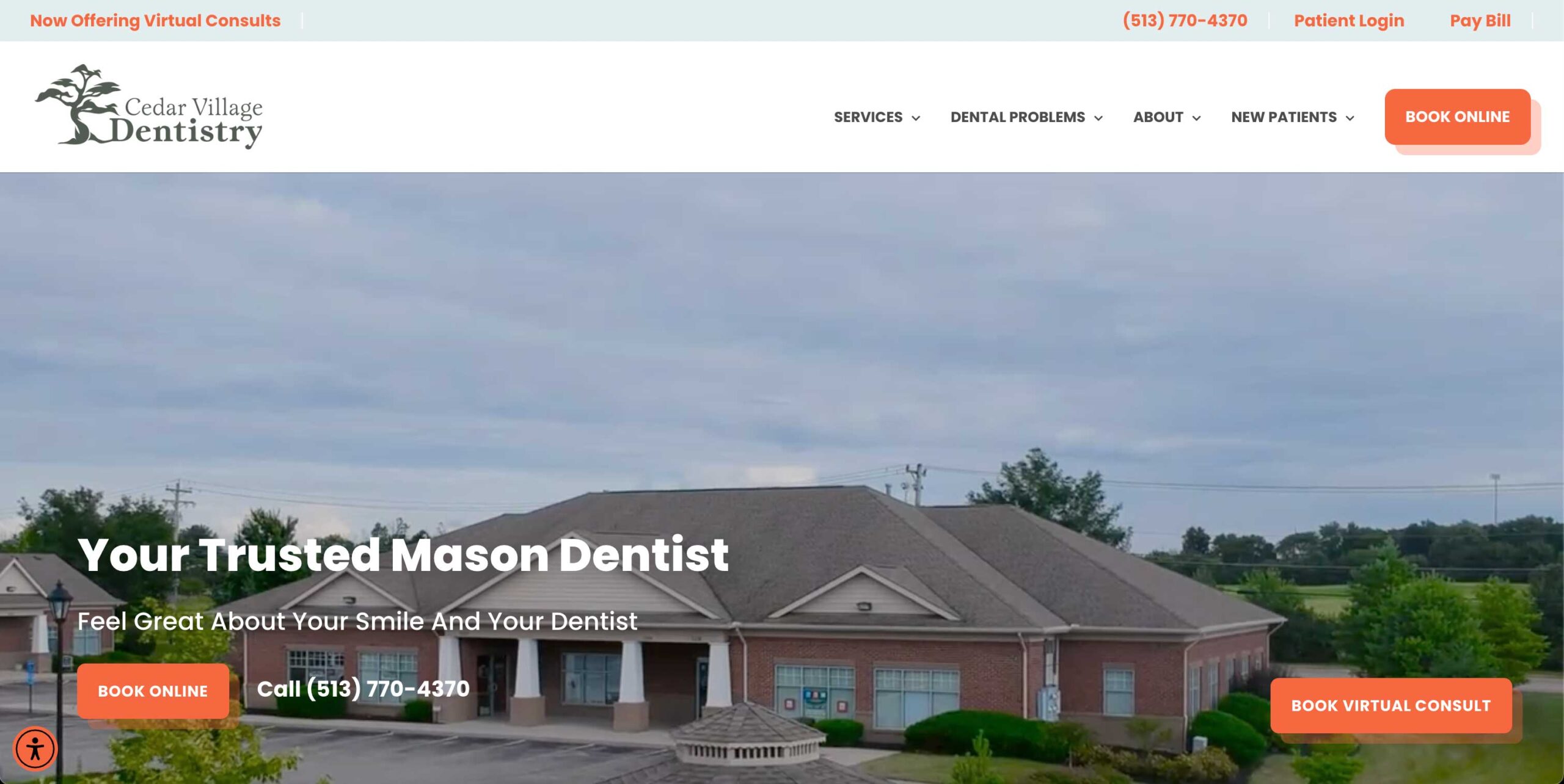
- Make the booking button impossible to miss: top nav, hero section, and sticky on mobile.
- Offer digital new patient forms so patients can complete them before they arrive.
- Set expectations right on the booking flow: what happens next, how long it takes, and what they should bring.
Quick gut-check
If a new patient lands on your site right now, could they book in under 60 seconds without calling? If not, you’re probably leaving appointments on the table.
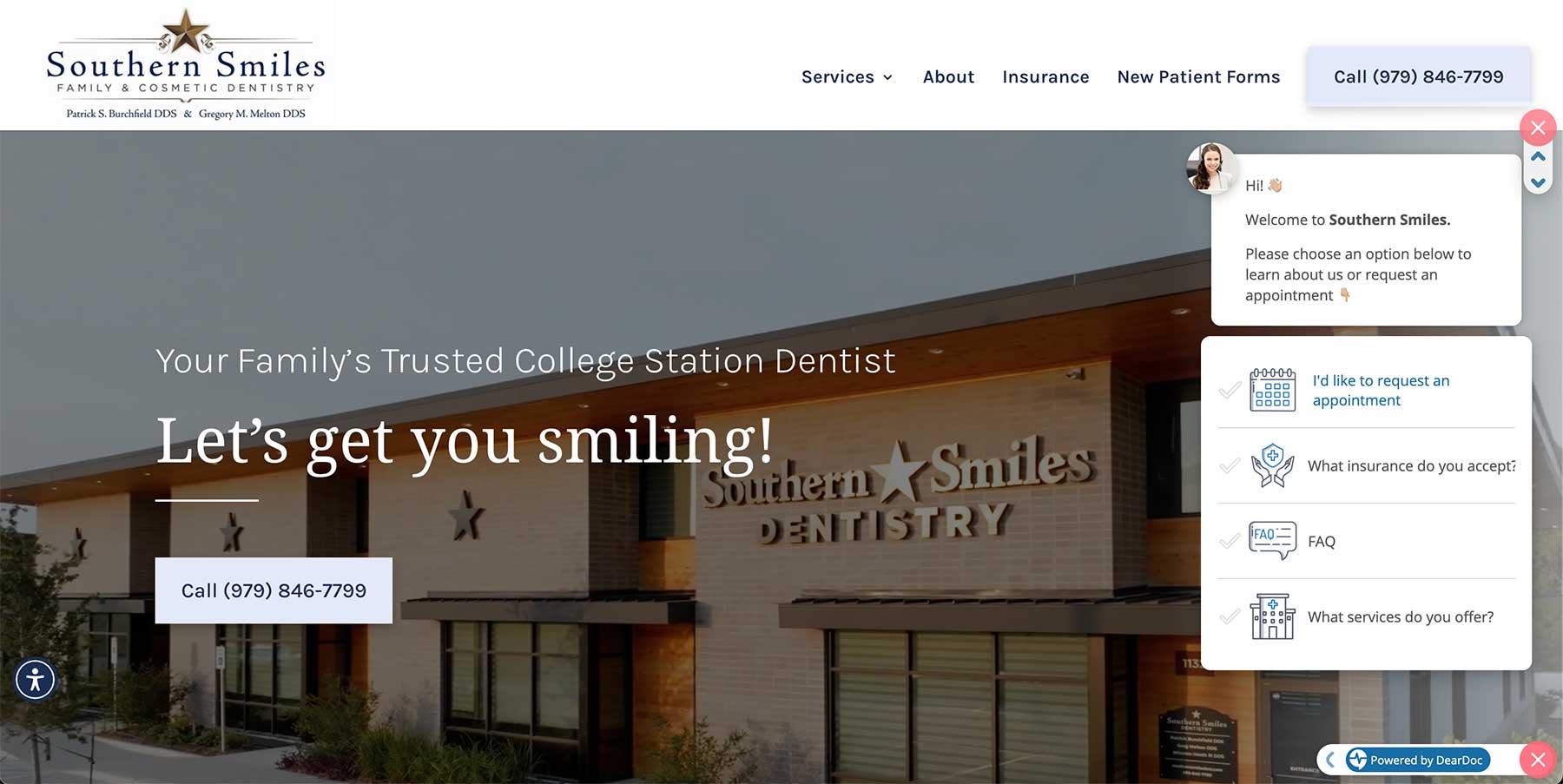
3. AI chatbots and personalized support
“Do you take my insurance?”
“How much does this usually cost?”
“Can I get in this week?”
“What should I do if this is an emergency?”
If they can’t find the answer fast, they bounce. An AI chatbot can catch those moments, answer the basics instantly, and help the right patients take the next step.
Why it matters
- It gives patients quick answers when your team is busy or the office is closed.
- It reduces friction for anxious patients who don’t want to call yet.
- It can route visitors toward the right action: call, book online, or request an appointment.
How to do it
- Start simple. Use it for common questions.
- Add guided options like: “Book an appointment,” “Emergency,” “Insurance,” “Cost,” “New patient special.”
- Make sure it hands off cleanly to a real person when needed, with a clear contact option.
- Track what people ask most, then use that to improve your FAQs and service pages.
- Keep the chatbot’s tone helpful, not salesy. In dentistry, trust beats clever.
4. ADA and WCAG accessibility compliance
Accessibility is also one of those “quiet” trust signals. A site that feels easy and clear helps everyone, not just visitors with disabilities.
Why it matters
- More patients can actually use your site, including people with visual, hearing, or motor challenges.
- A cleaner, more readable site usually converts better on mobile, too.
- It reduces legal risk, since accessibility expectations keep rising.
How to do it
- Use readable font sizes, strong contrast, and clear button labels.
- Add alt text to images so screen readers can describe them.
- Make sure your site works with keyboard navigation, not just a mouse.
- Add captions to videos.
- Test key pages with an accessibility checker, then fix the high-impact issues first (menus, forms, buttons, headings).
Looking for inspiration?
See how 26 top-performing dental websites combine design, accessibility, and conversion into one seamless experience.
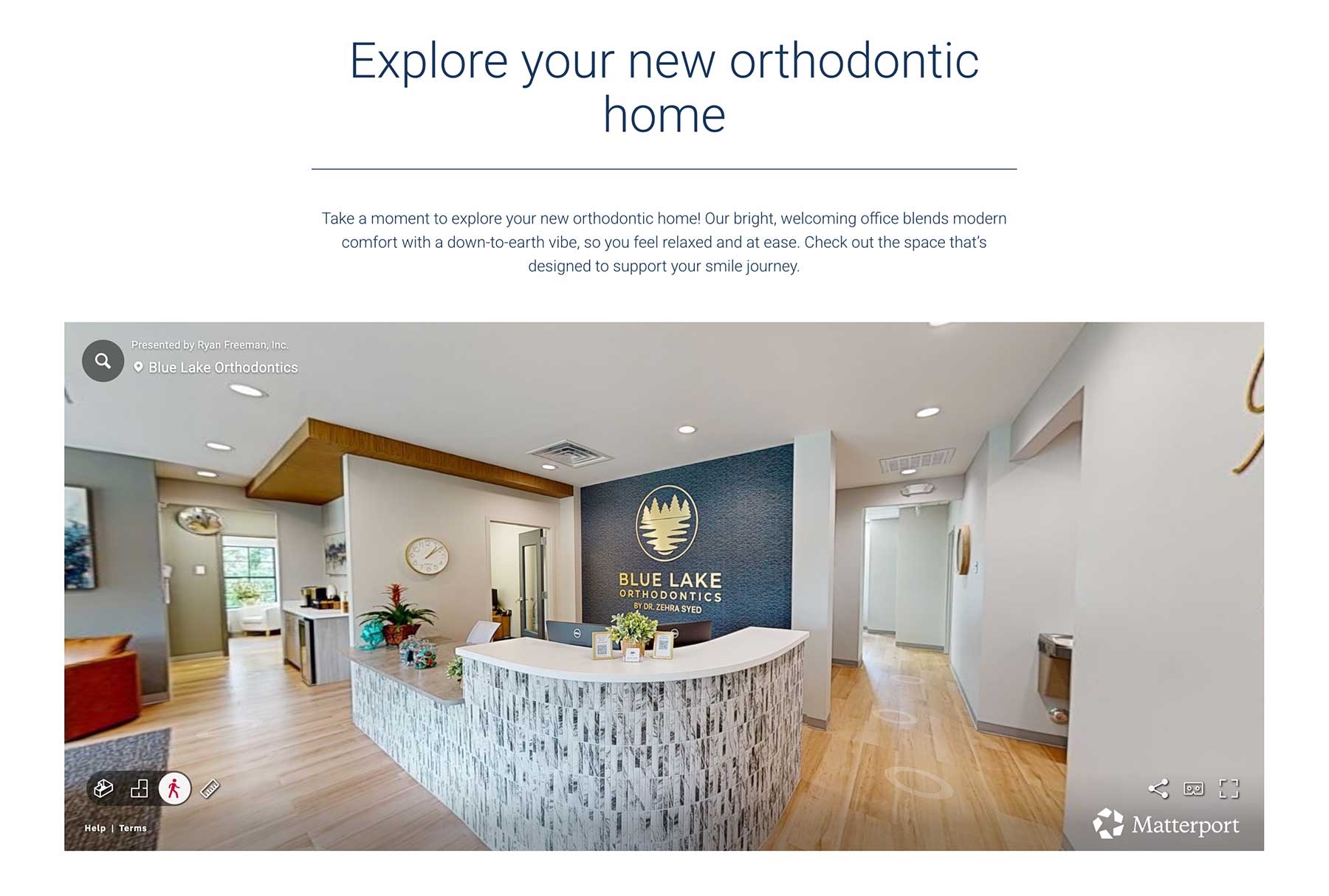
5. Video tours and virtual consults
Why it matters
- Patients get a “this feels right” moment sooner, which shortens the decision process.
- Video keeps people on your site longer, and that usually leads to more clicks, calls, and form fills.
- Virtual consult options remove friction for cosmetic and ortho starts, and help you capture leads after hours.
How to do it
- Add a short homepage video (10 to 30 seconds) showing your team, your space, and real smiles. Keep it simple and natural.
- Create one “meet the doctor” clip and one “what to expect” clip for new patients.
- These do heavy lifting for trust.
- Offer virtual consults for the right cases (Invisalign, veneers, smile makeovers).
- Make the next step obvious with one button.
- Use captions and keep file sizes optimized so the page stays fast on mobile.
6. Patient reviews and social proof
They also help with visibility. Google uses review quality and volume as a local trust signal, and AI-driven search is increasingly pulling confidence cues from what patients say about you.
Why it matters
- Reviews reduce uncertainty fast, especially for anxious patients and higher-cost treatment decisions.
- Social proof can lift conversions because it answers the silent question: “Do people actually like this place?”
- Fresh, specific reviews strengthen local credibility over time.
How to do it
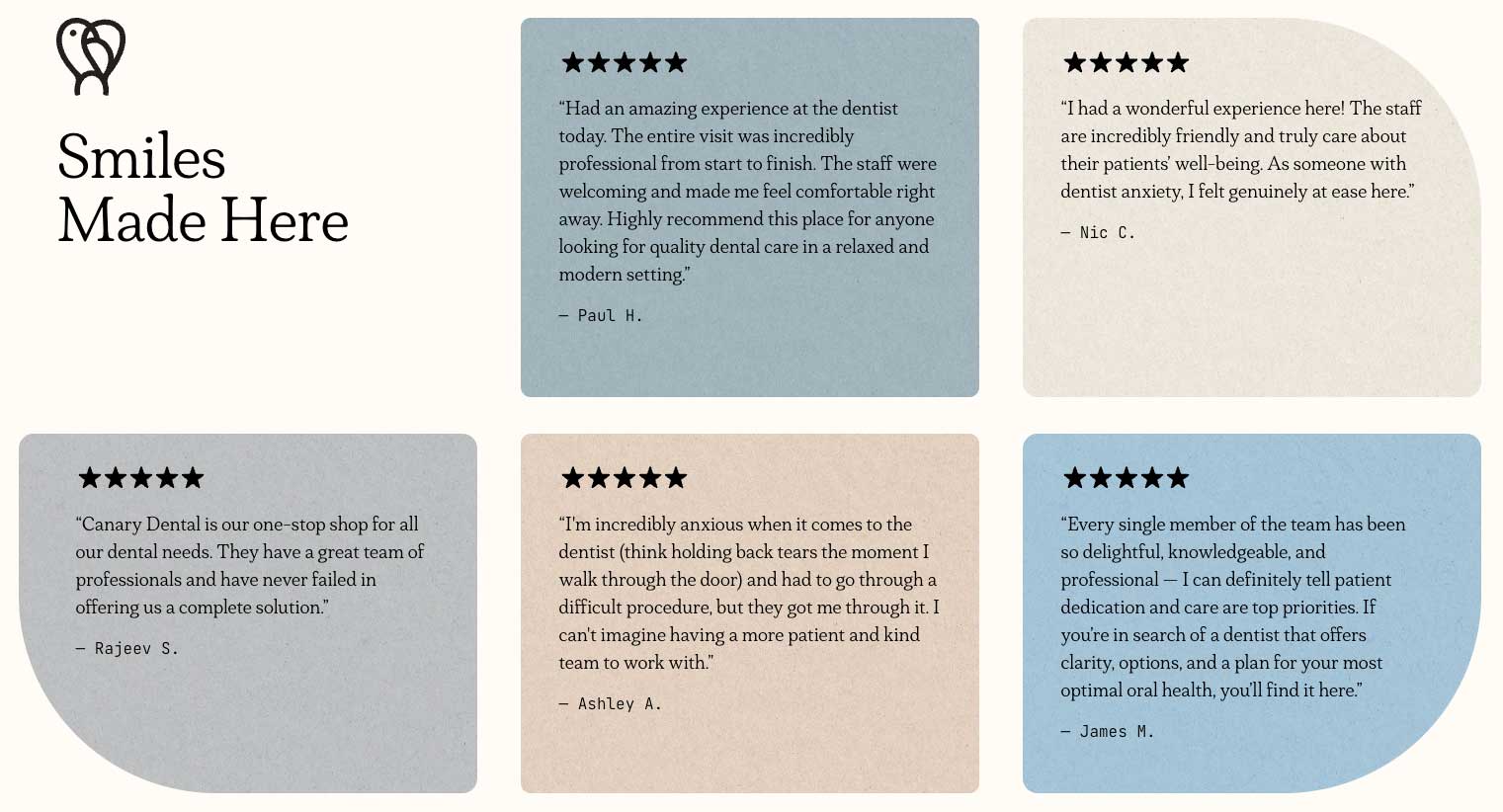
- Feature a “Reviews” section on your homepage with real Google reviews (not just a badge).
- Add reviews to high-intent pages too, like implants, Invisalign, emergency, and new patients.
- Pull short, specific quotes that mention services, comfort, or outcomes. Those are the most believable.
- Mix formats: written reviews, video testimonials, and before-and-after photos (with consent).
- Make it easy to leave a review with one simple link or QR code your team can share after a great visit.
7. Clear Calls-to-Action (CTAs) above the fold
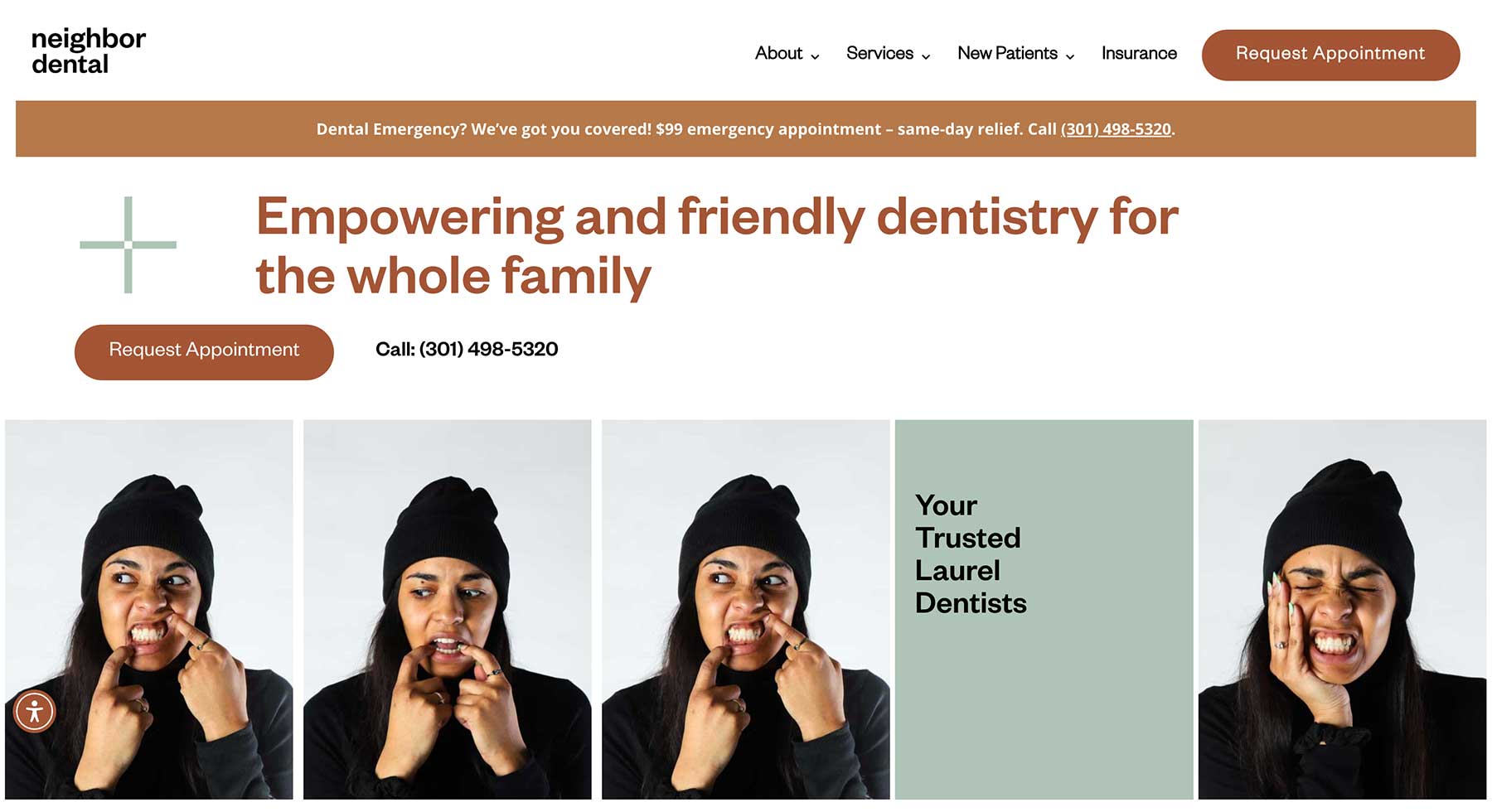
Your job is to make the next step obvious the moment the page loads.
Why it matters
- Most visitors decide fast. If they don’t see a clear next step, they leave.
- A strong CTA reduces friction and turns interest into action.
- It keeps your website focused on one goal: booking.
How to do it
- Put your primary CTA above the fold on every key page (home, services, new patients, emergency).
- Use one main action per page, like “Book an appointment” or “Request an appointment,” and support it with a secondary option like “Call now.”
- Make your header sticky on mobile with a tap-to-call button and a booking button.
- Repeat CTAs throughout the page, especially after benefits, reviews, and FAQs.
- Keep the language straightforward: “Book online,” “Request an appointment,” “Call now,” “Text us.”
8. Content-rich service pages & FAQs
A strong service page does two jobs at once: it helps a patient feel confident, and it helps search engines understand exactly what you offer.
Why it matters
- Patients want clarity fast: what it is, who it’s for, what it costs, what to expect, and how to book.
- Detailed pages give you more chances to show up for high-intent searches.
- FAQs help you rank for question-style searches and can improve visibility in AI-driven results.
- Better content usually means better conversions, because it reduces uncertainty.
How to do it
- Create a dedicated page for each major service (implants, Invisalign, veneers, emergency dentistry, sedation, etc.).
- Structure each page with clear headings that match real searches (cost, timeline, pain, recovery, candidacy, financing).
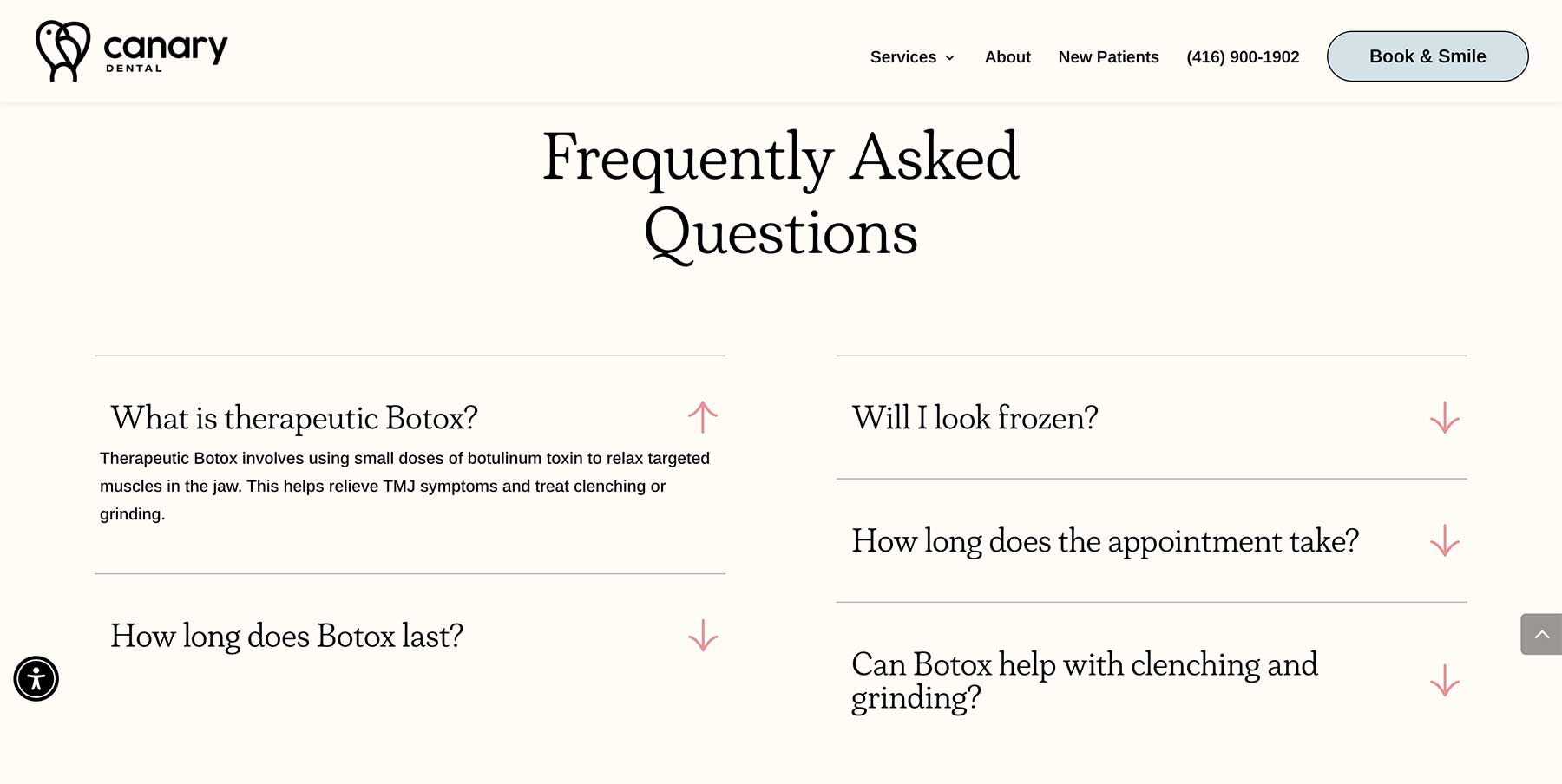
- Add a robust FAQ section at the bottom of each service page, using the exact questions patients ask.
- Include FAQ schema markup so Google can read your Q&As more easily and potentially surface them in rich results and AI summaries.
9. Before & after galleries
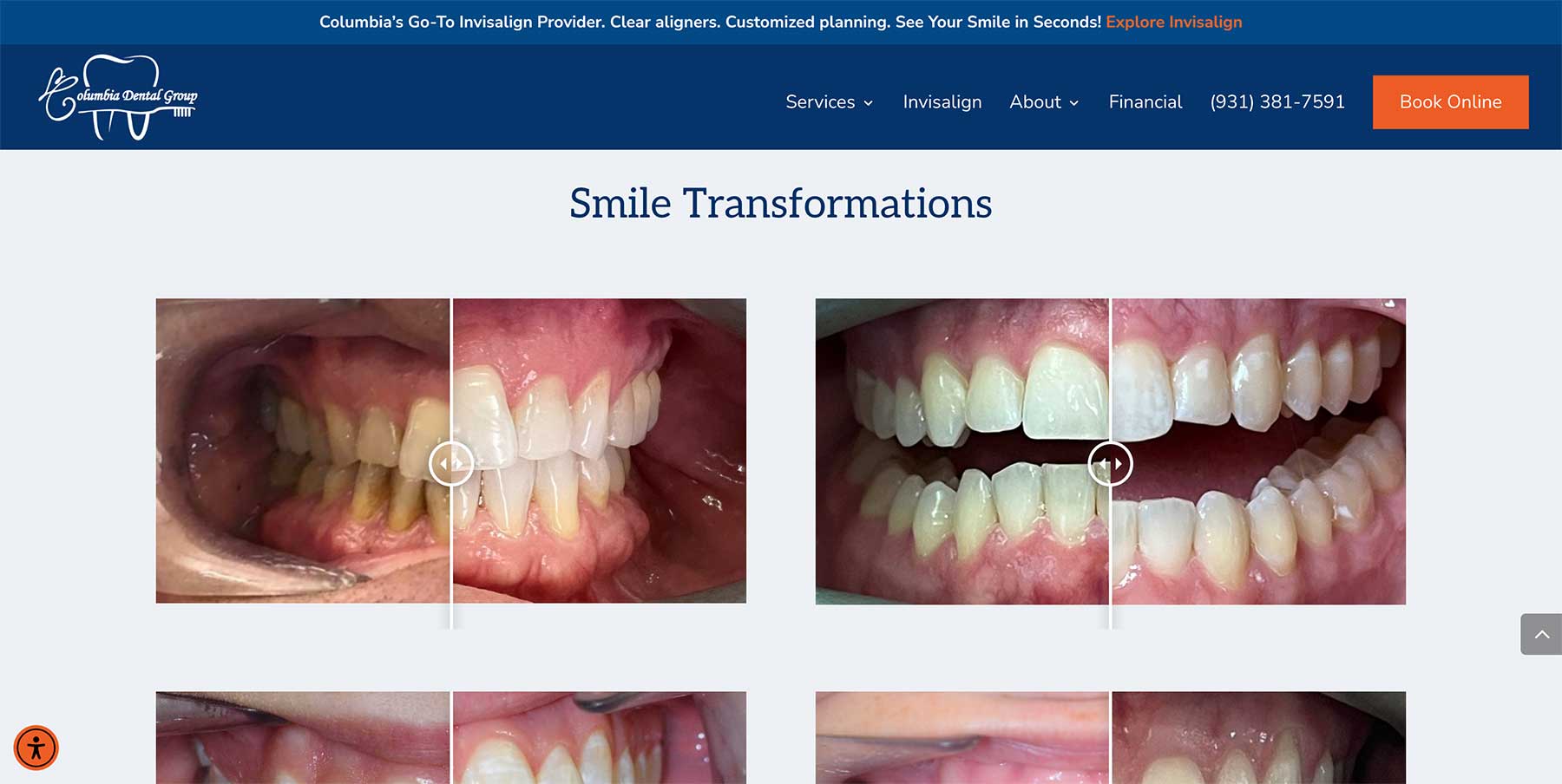
Before and after photos make the outcome feel real, and they help someone picture what’s possible for their own smile.
This is especially powerful for cosmetic and restorative services where the “result” is the main reason patients book.
Why it matters
- It builds trust fast because it’s proof, not promises.
- It helps patients self-qualify: “Yes, this is the kind of change I want.”
- It reduces hesitation, because people can see real outcomes before they commit.
- It can increase conversions on high-value pages like veneers, Invisalign, and implants.
How to do it
- Use high-quality photos with clear lighting and consistent angles.
- Always get written consent and follow HIPAA and privacy rules.
- Organize your gallery by treatment type (veneers, implants, whitening, Invisalign, smile makeover).
- Add short captions that give context without oversharing (example: “6-month
- Invisalign result” or “Single implant restoration”).
- Place galleries near the decision point on key pages, usually after benefits and before the main CTA.
10. Team bios & practice culture
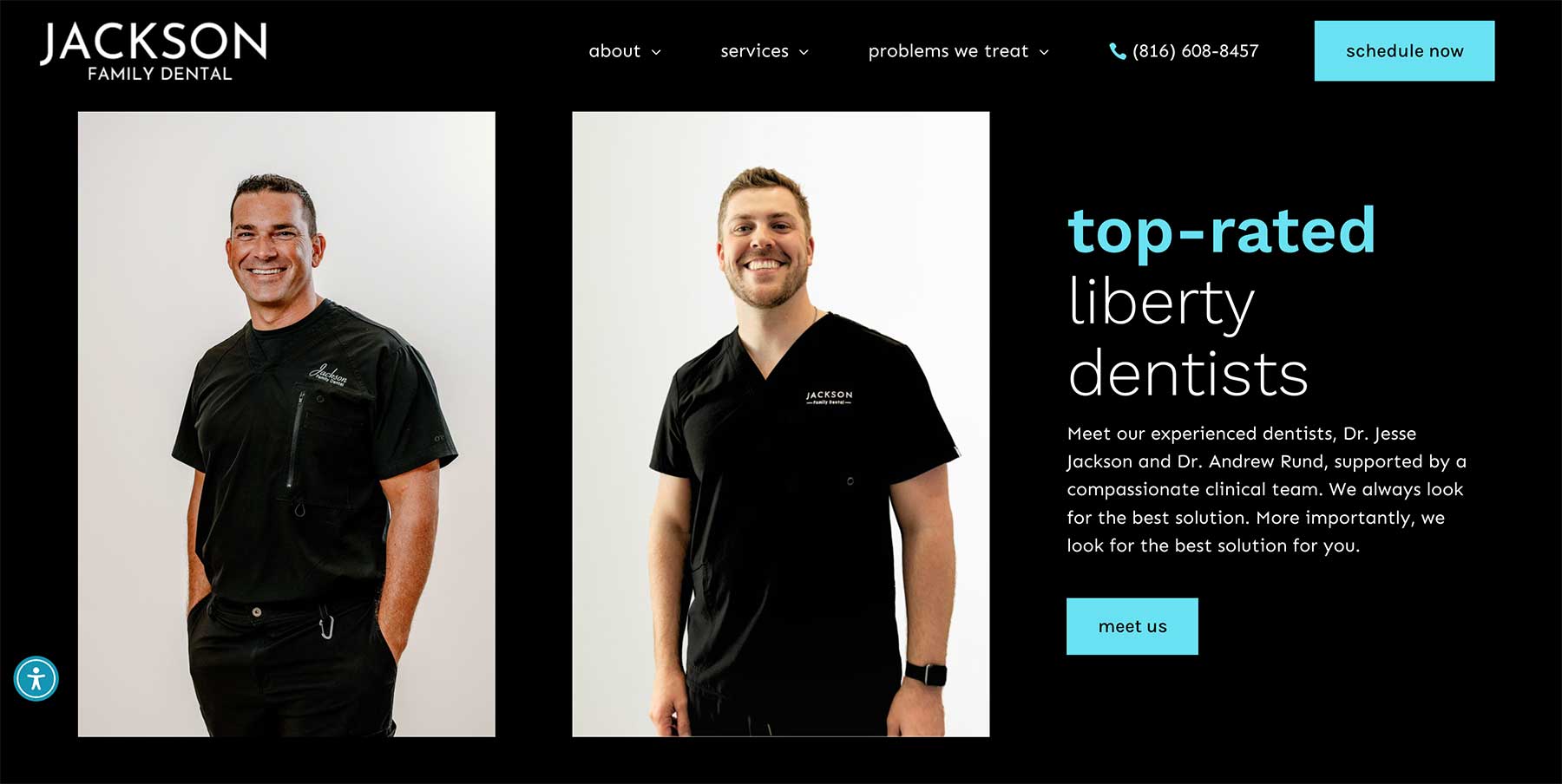
This section is also where your culture shows up. Warmth, confidence, and professionalism can come through in a few photos and a few well-written lines.
Why it matters
- It builds trust faster because patients can “meet” you before they arrive.
- It reduces anxiety, especially for patients who feel nervous about dental visits.
- It helps your practice stand out, since most offices look similar on paper.
- It strengthens conversion because people book when they feel comfortable with the team.
How to do it
- Add real headshots of doctors and team members (professional is great, but natural works too).
- Write short bios that sound human, not like résumés.
- Include one personal detail per person (languages spoken, favorite part of the job, local connection).
- Share your mission and values in plain language, then back it up with examples.
- Add a few photos that show your culture in action: team collaboration, patient moments, community events.
Want your team page to feel more real (and convert better)?
Original photos make your office feel human and help patients feel comfortable choosing you.
11. Transparent Pricing & Membership Plans
When your website answers the “what will this cost?” question early, you reduce hesitation and keep more people moving toward booking.
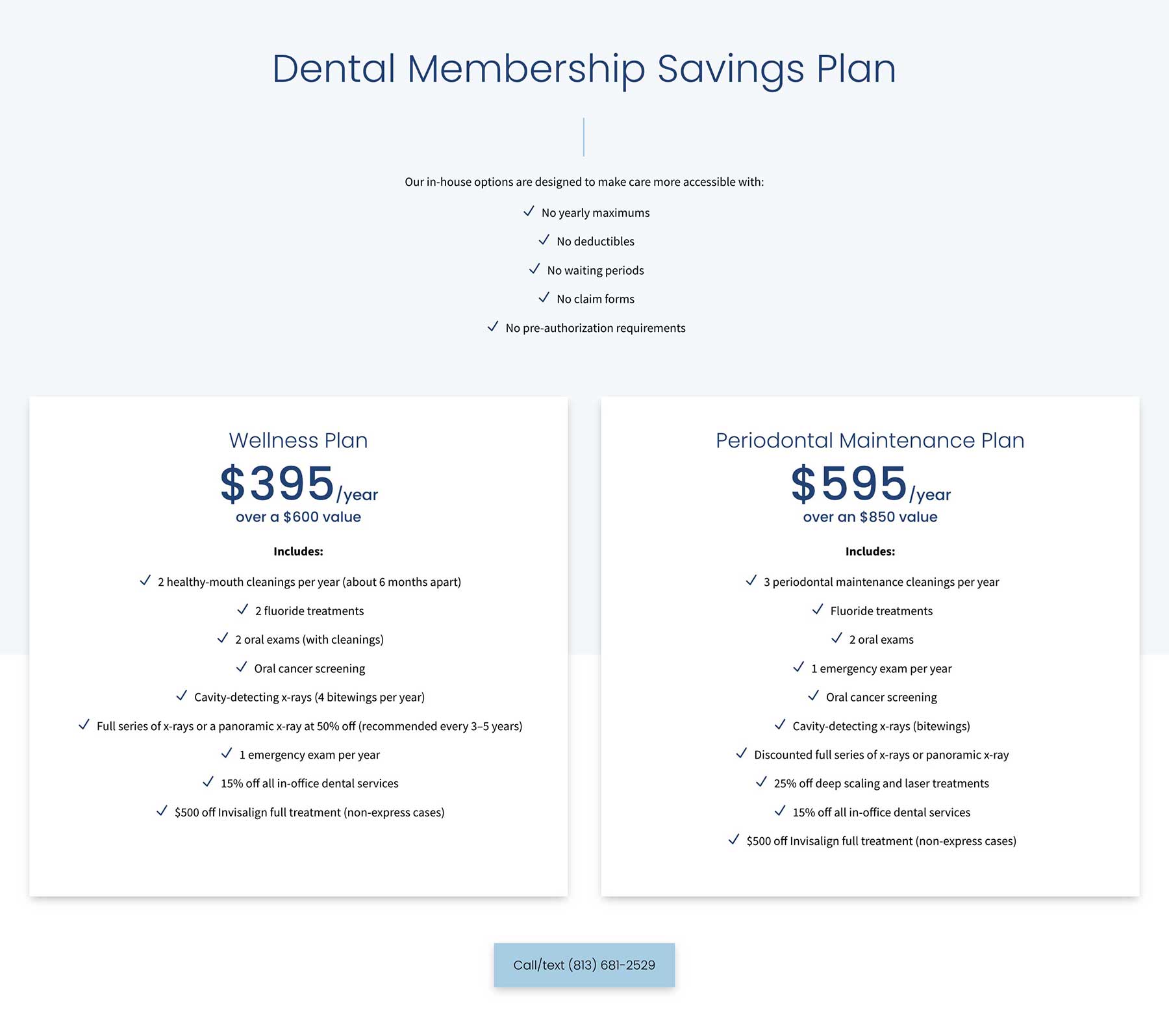
Pricing clarity also helps you convert fee-for-service and uninsured patients. A simple membership plan can turn “I’ll think about it” into “let’s do this,” especially when it’s easy to understand and easy to join.
Why it matters
- It reduces drop-off from price anxiety and uncertainty.
- It builds trust fast because your practice feels transparent.
- It supports higher-value treatment by giving patients a clear way to say yes.
How to do it
- List starting prices or ranges for common treatments (even “starting at” helps).
- Add a simple membership plan section with what’s included and monthly cost.
- Use plain language around insurance and payment expectations.
- Link to a downloadable membership flyer or a quick “estimate request” form.
12. Integrated telehealth & virtual consults
It also helps you capture patients who are nervous or simply busy. When the next step feels easy, more people take it.
Why it matters
- It removes friction for new patients who are unsure or anxious.
- It can increase lead volume for cosmetic and ortho cases where people want a “quick read” first.
- It gives your team a way to pre-qualify and guide patients to the right appointment type.
How to do it
- Add a clear “Virtual consult” option in your main navigation and booking flow.
- Keep the form short: name, contact info, main concern, and photo upload (optional).
- Set expectations on the page: who it’s for, what happens next, and how long it takes.
- Follow up fast with a text or call so the patient doesn’t go cold.
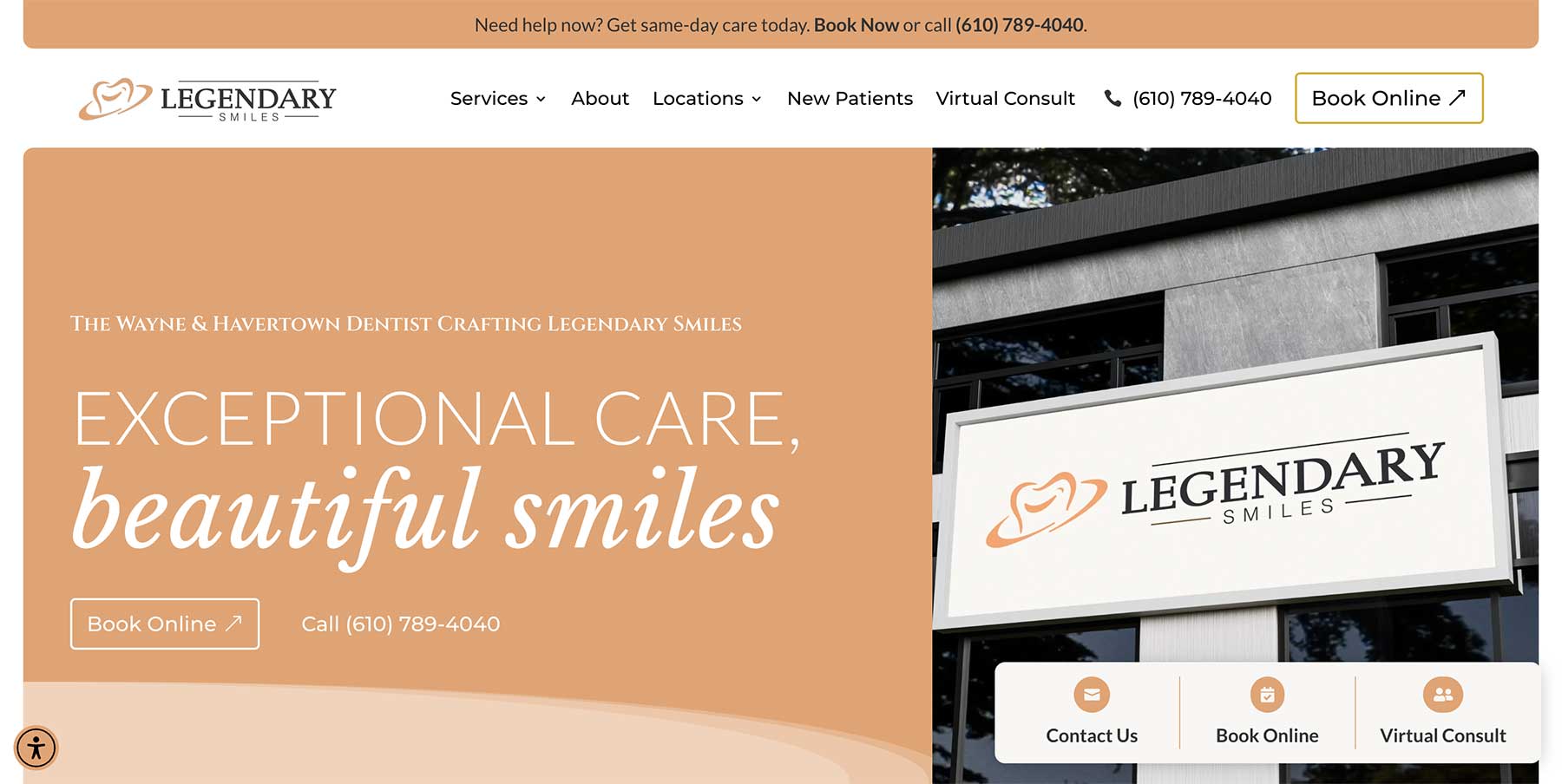
13. Local SEO & Google Business Profile integration
Your site and your Google Business Profile need to work together.
When your Google presence matches your website and your website makes it easy to take action, you win more of those high-intent searches.
Why it matters
- Local search drives your highest-converting traffic (near me, city-based, emergency).
- Consistent info builds trust with both Google and patients.
- A strong Google profile plus a strong website increases calls, direction requests, and bookings.
How to do it
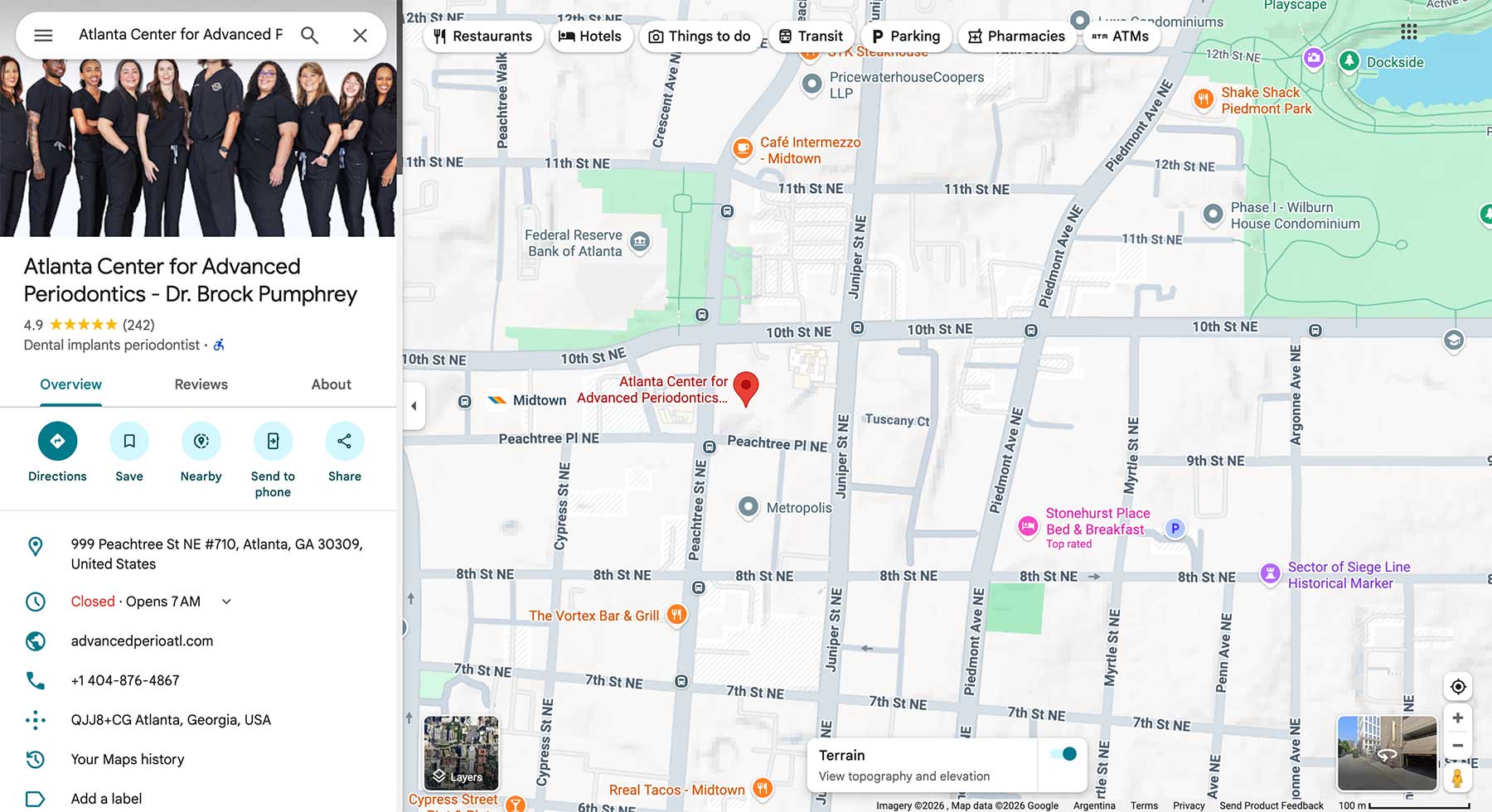
- Make sure your name, address, and phone number match everywhere (site, GBP, directories).
- Embed your map and highlight reviews on key pages (homepage, contact, new patients).
- Add location signals on-site: service area, landmarks, parking notes, neighborhood mentions (when relevant).
- Build or improve location pages if you serve multiple areas.
Want your website to rank and convert?
Let’s build something that works as hard as you do.
14. Schema markup & FAQ structured data
Today, AI-driven results pull from well-structured info. Schema helps you show up in richer results, and makes your content easier for search engines to trust and reuse.
Why it matters
- It helps Google and AI systems understand your services, location, and credibility faster.
- It can improve visibility in rich results (like FAQ snippets) and support AI citations.
- It makes your best pages more competitive without needing to rewrite everything.
How to do it
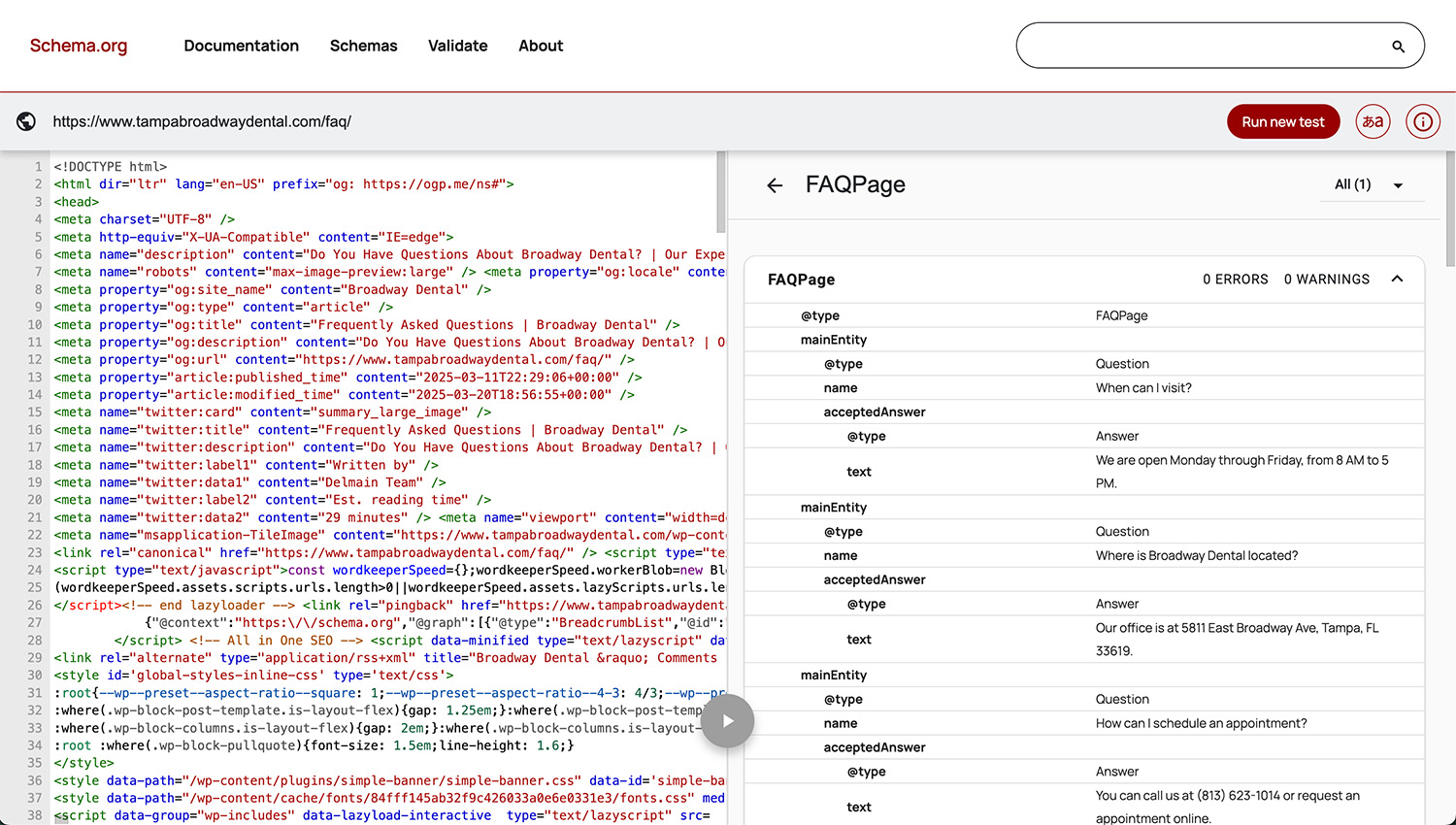
- Add the right schema types: LocalBusiness, Dentist, Service, and FAQPage (where relevant).
- Put FAQ schema on pages with real FAQs, not fluff. Keep answers clear and specific.
- Use schema on key pages first: homepage, core service pages, and your main location page.
- Validate it with Google’s Rich Results Test and fix errors (even small ones).
15. Accessibility & inclusive design
It’s also a trust thing. A site that feels easy to navigate quietly signals, “This practice is organized. They care.”
Why it matters
- More patients can comfortably use your site, including people with visual, hearing, or motor challenges.
- Clearer layouts and simpler navigation often improve conversions for everyone.
- Accessibility expectations keep rising, so this helps reduce legal and reputation risk.
How to do it
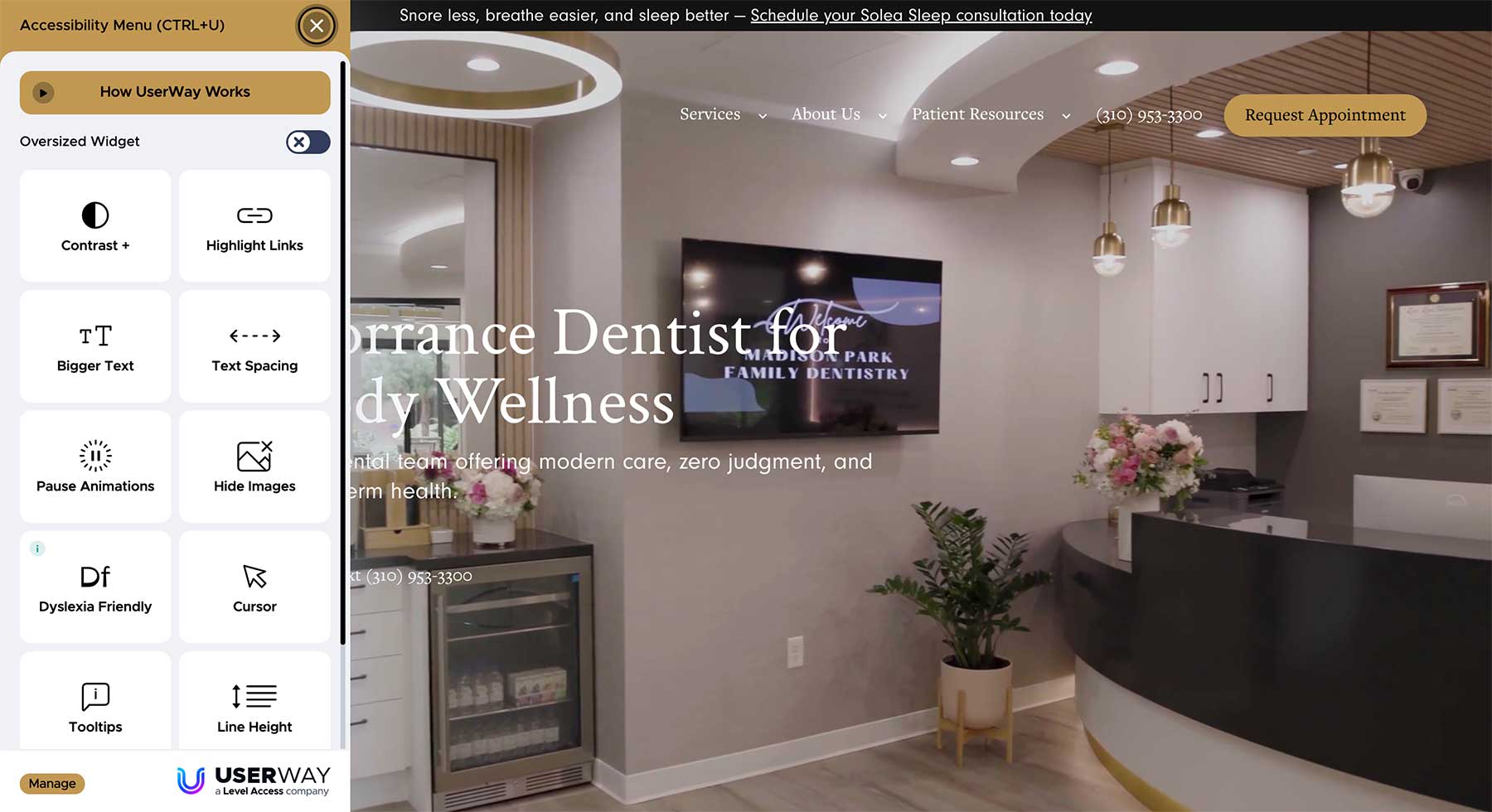
- Use readable font sizes, strong contrast, and clear button labels.
- Make forms simple, with obvious error messages and tap-friendly fields.
- Add alt text to important images and captions to videos.
- Ensure the site works with keyboard navigation and screen readers.
- Run an accessibility scan, then fix the biggest conversion blockers first (menus, forms, buttons, headings).
16. Eco-friendly hosting & sustainability messaging
The key is to keep it simple and believable. Just a few real actions that match how you run your practice.
Why it matters
- It can differentiate your practice in a subtle, modern way.
- It builds trust with patients who care about values, not just convenience.
- It gives you easy content for your website and social media that feels human.
How to do it
- Choose a web host that offers renewable energy or carbon-neutral options.
- Add a short “Sustainability” section on your About page (2–3 bullets is enough).
- Highlight practical steps you already take, like digital forms, paperless billing, or recycling programs.
- Keep it local and specific, for example, “paperless check-in” or “LED lighting throughout the office.”
17. Patient education hub & blog
It also gives Google and AI tools more “proof” that your site is the best answer, especially for those early research searches like cost, pain, timeline, and comparisons.
Why it matters
- You capture patients earlier in the decision process, before they search “dentist near me.”
- Helpful content builds authority and trust, which can improve rankings and conversions.
- It gives you evergreen content to reuse in emails, social media, and ads.
How to do it
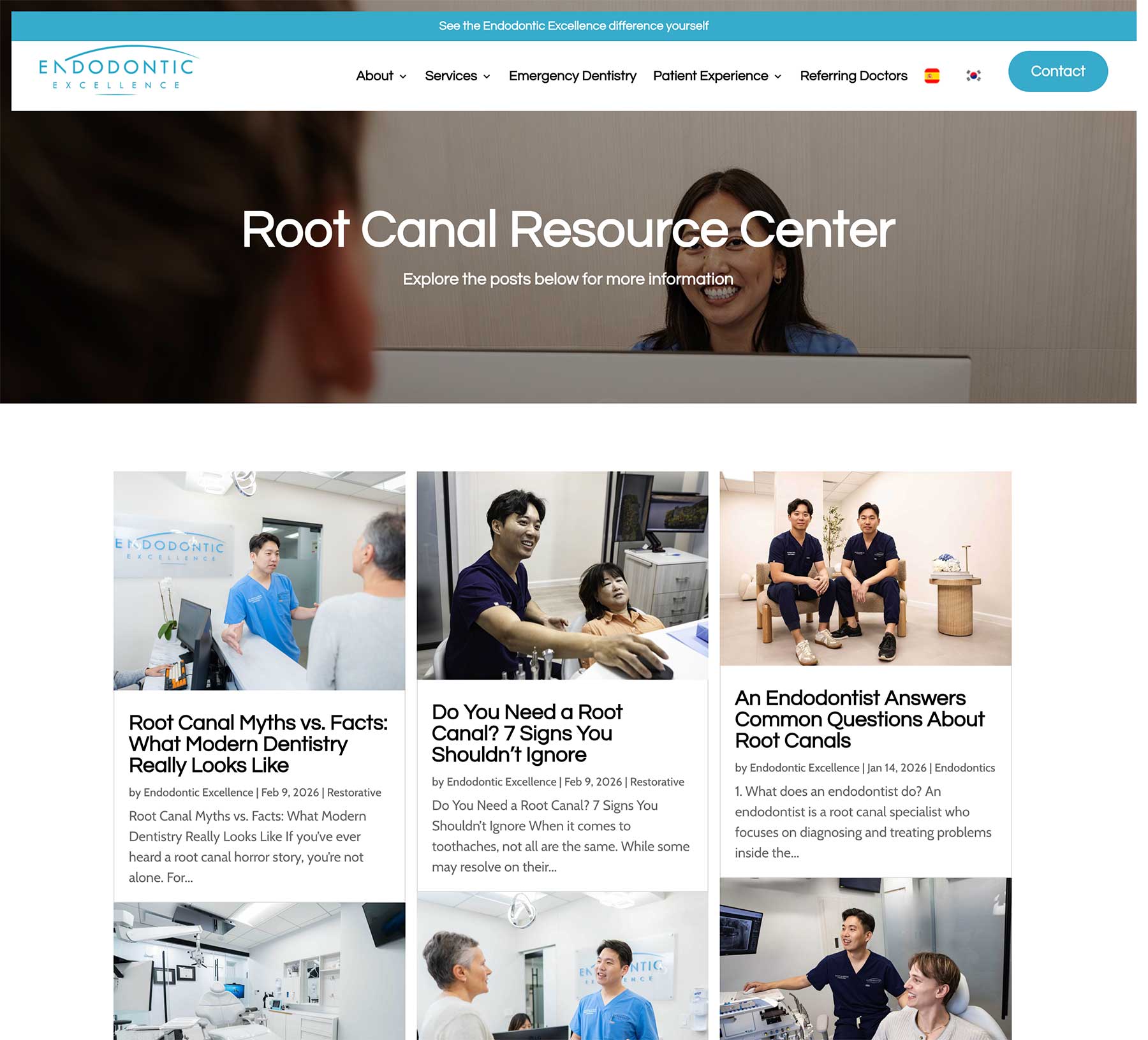
- Create a simple “Patient Resources” or “Learn” section on your site.
- Start with 8–12 high-intent topics patients ask constantly: cost, recovery, how it works, and “am I a candidate?”
- Add short FAQs to every service page and link related posts underneath.
- Keep posts scannable: clear headings, short answers, and real examples from your practice.
18. Online payment & financing integration
This is also a trust play. Clear payment info signals that your practice is organized, transparent, and patient-friendly.
Why it matters
- Removes a major reason patients delay scheduling.
- Helps case acceptance for higher-ticket treatments like implants, veneers, and ortho.
- Reduces front desk back-and-forth and no-shows caused by uncertainty.
How to do it
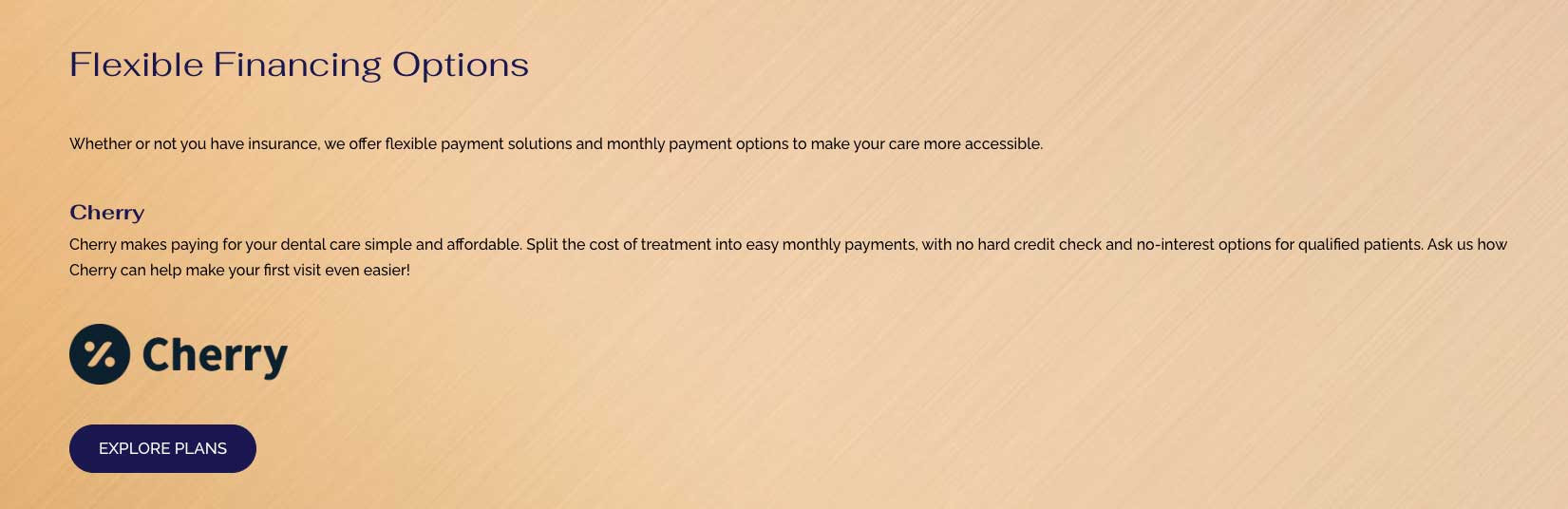
- Add a “Payment Options” section that explains insurance, financing, and what to expect.
- Include a simple online bill pay option for current patients.
- Offer financing links or a “Check eligibility” button for tools like CareCredit, Sunbit, Cherry, or Proceed.
- Mention in-house membership plans clearly, especially if you’re fee-for-service.
- Place payment info where it matters: on high-value service pages, not buried in the footer.
19. Real-time appointment availability
Patients are booking everything else in their life instantly. If your website makes them wait for a call back, you give them time to second-guess, keep scrolling, or book with the next practice.
Real-time availability removes that hesitation. It turns “I should schedule” into an actual appointment.
Why it matters
- Increases conversions by reducing friction at the exact moment intent is highest.
- Cuts down on missed calls and phone-tag, especially after hours.
- Helps your team spend less time scheduling and more time helping patients.
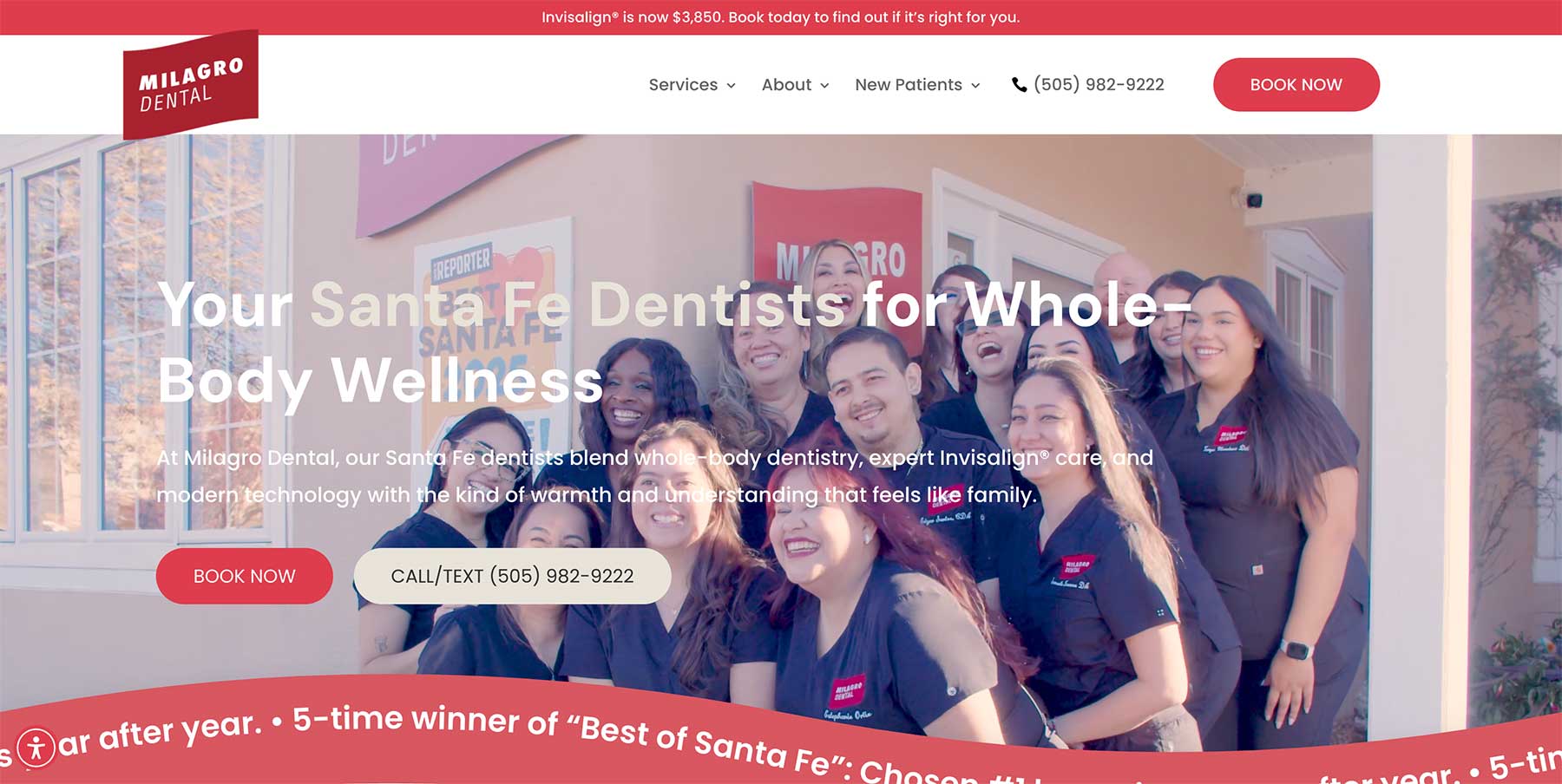
- Note that real-time calendaring is especially important for consultations. The best orthodontics websites, for instance, use real-time appointment availability heavily to win initial consultations.
How to do it
- Use an online booking tool that syncs with your practice management software.
- Show real openings for new patients, even if it’s limited to certain appointment types.
- Add “Book online” buttons on the homepage, header, and key service pages.
- Set rules so the schedule stays clean (buffers, provider selection, appointment length).
- Confirm instantly via text or email so patients feel locked in.
20. Voice search & conversational content
When your content matches how patients actually search, you show up more often and convert more of the clicks you do earn.
Why it matters
- More searches happen through voice and “question style” queries (especially on phones).
- Conversational pages are easier for patients to scan, understand, and trust.
- Clear Q-and-A style content also helps AI-driven search pull your answers into results.
How to do it
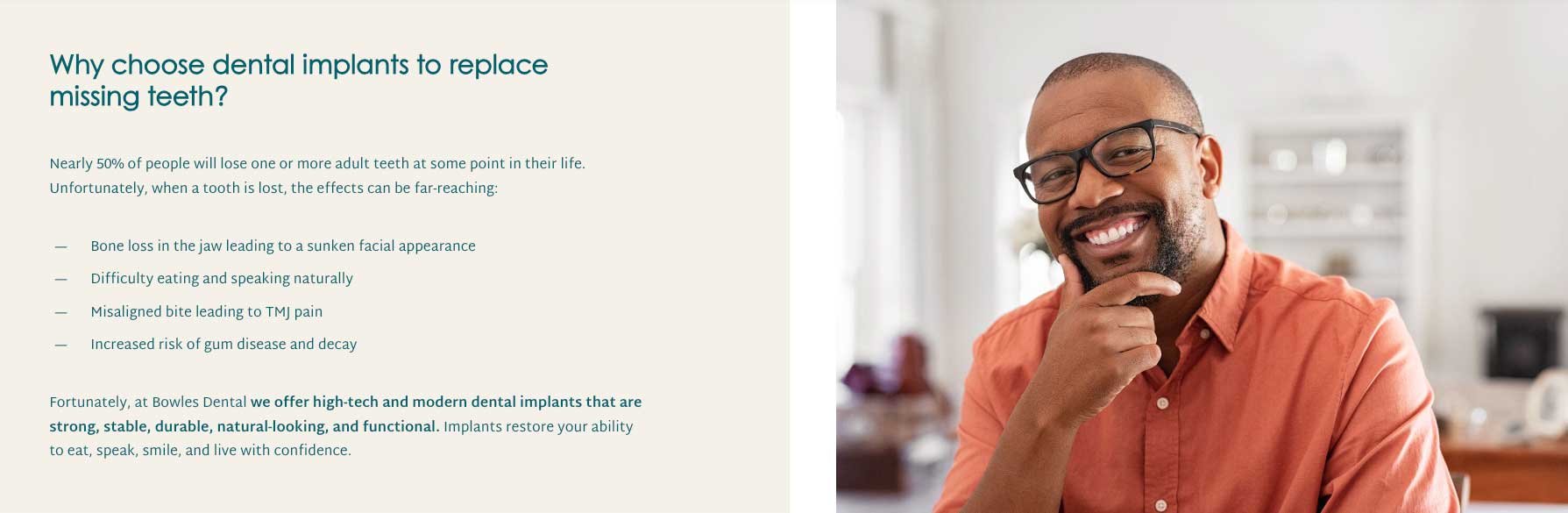
- Write headings as questions patients actually ask: “How much do dental implants cost?” “Is Invisalign painful?”
- Add short, direct answers right under each question before you go into detail.
- Build an FAQ section on key service pages, not just one general FAQ page.
- Use natural wording, not keyword stuffing. Think: what a patient would say out loud.
- Keep answers scannable with short paragraphs, bullets, and clear next steps.
21. Social media integration & shareability
Patients are already checking you out on Instagram, Facebook, or TikTok. Your website should make it easy to keep that momentum going.
This is also a credibility layer. When your site and social presence “match,” it signals that your practice is active, real, and trusted.
Why it matters
- Social proof reinforces what patients just saw on your site (team, results, vibe).
- It gives hesitant visitors a low-pressure next step besides “book now.”
- It extends the life of your best content, especially videos and before-and-afters.
How to do it
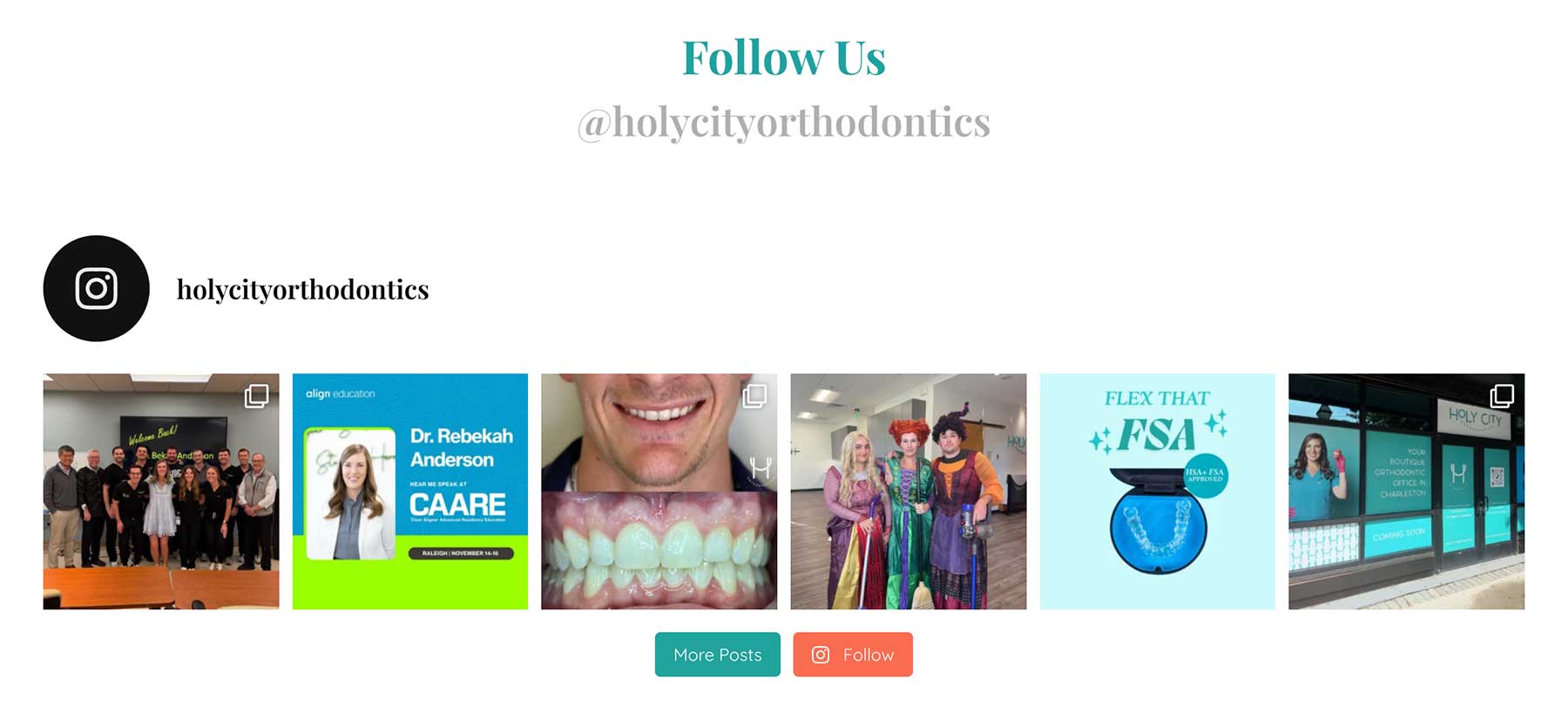
- Embed an Instagram or Facebook feed on the homepage or “About” page (keep it clean and fast).
- Link to your socials in the header or footer so they’re always easy to find.
- Add simple share buttons on blog posts and smile gallery pages.
- Feature 2–3 of your strongest posts as “highlights” (testimonials, before-and-after, behind-the-scenes).
- Make sure your branding is consistent across site and socials (same colors, tone, and photo style).
If your brand looks like everyone else’s, your website will too.
See how leading practices use bold branding and memorable logos to stand out.
Check out 32 Jaw-Dropping Dental Branding & Logo Ideas.
22. Special offers, promotions & pop-ups
A great offer gives patients a reason to choose you now, and removes the “I’ll do this later” delay that kills a lot of bookings.
The key is using promotions like a helpful nudge, not a gimmick. Clear, simple, and easy to understand wins.
Why it matters
- A strong offer can lift conversions fast, especially for new patients.
- It helps patients who are price-sensitive take the next step.
- It gives your ads and SEO pages a sharper hook than “schedule today.”
How to do it
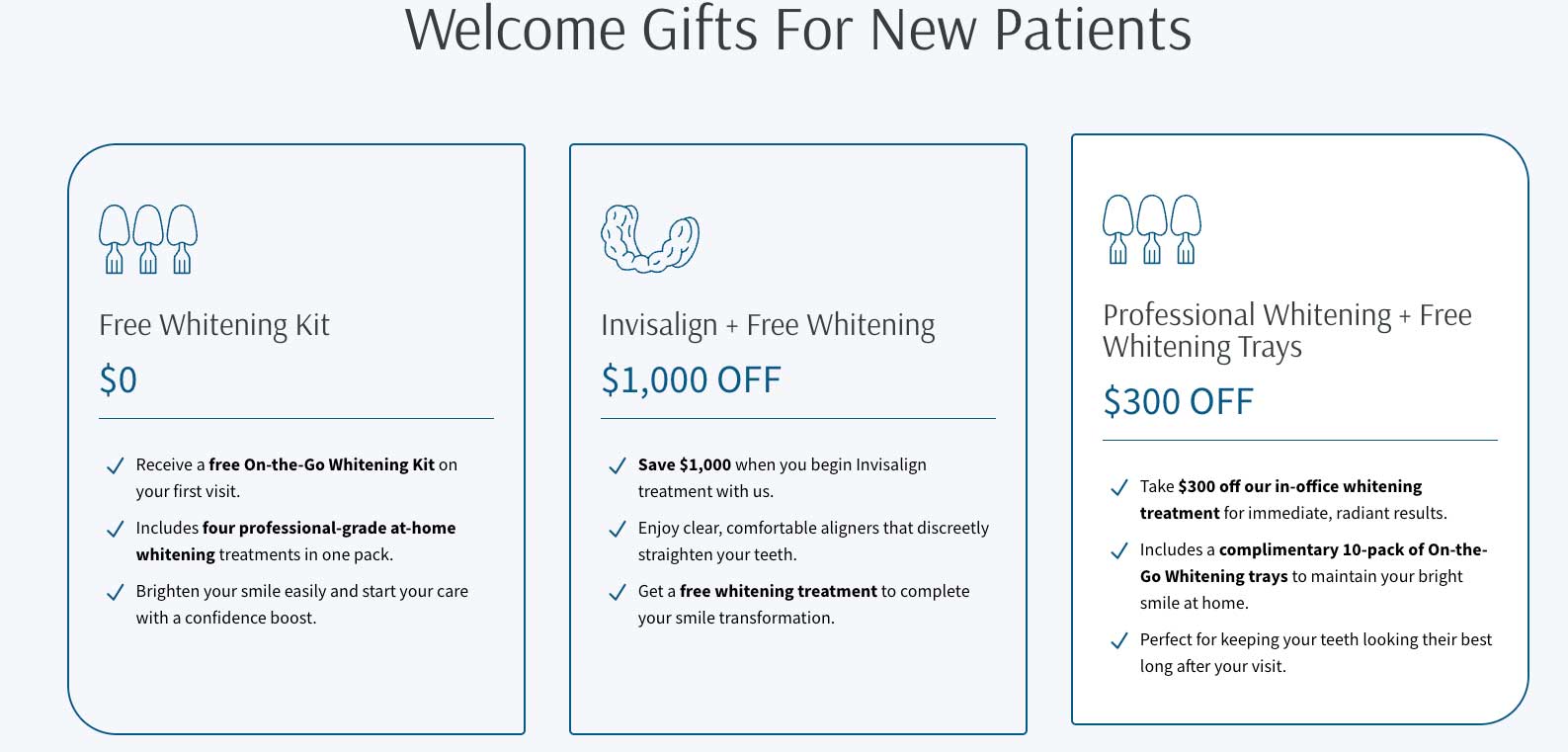
- Promote one primary offer at a time (new patient exam, whitening, Invisalign consult, etc.).
- Place it where it can’t be missed: homepage hero, sticky header, and relevant service pages.
- Use a lightweight pop-up only when it makes sense (exit-intent or after 10–15 seconds).
- Keep the pop-up simple: headline, 1–2 lines of detail, one button.
- Track it. Make sure every offer has a clear conversion goal (calls, forms, bookings).
23. HIPAA-compliant secure messaging
It also signals professionalism. When your site handles communication the right way, it builds trust before a patient ever meets you.
Why it matters
- Patients feel more comfortable asking about treatment, pain, timing, and concerns.
- Your team gets fewer vague inquiries and more bookable conversations.
- It reduces risk compared to unsecure forms or casual texting for sensitive info.
How to do it
- Use HIPAA-compliant forms and messaging tools (not a generic “email us” form for everything).
- Keep forms short: name, contact info, reason for visit, preferred time, and an optional message.
- Add clear expectations right below the form: response time and what to do in an emergency.
- Route messages to the right place (front desk, patient coordinator) so nothing gets lost.
- Make secure messaging easy to find on mobile (header button + contact page).
24. Multilingual support
This is one of those upgrades that quietly expands your reach without changing your clinical care.
Why it matters
- You make it easier for more families in your community to say “yes” to booking.
- Patients understand your services, policies, and next steps more clearly, which reduces drop-off.
- It can improve local performance because you’re matching how real people search.
How to do it
- Start with the pages that drive bookings: homepage, contact, new patients, top service pages.
- Translate the essentials: scheduling, hours, location, insurance, pricing basics, and forms guidance.
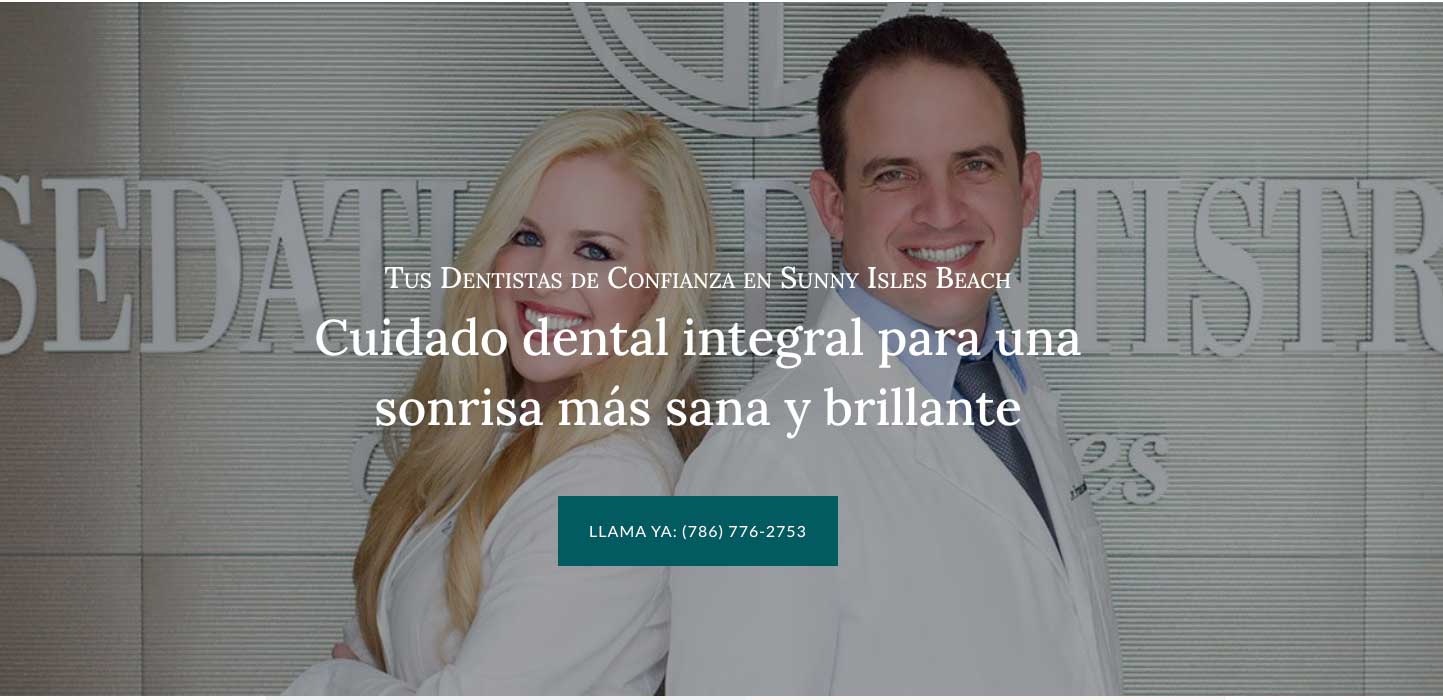
- Use a language toggle if you can support it well, or a high-quality translation tool for a first step.
- Make sure your calls to action stay clear in every language (buttons, headers, forms).
- If you run ads, align landing pages with the language your ads are written in.
25. Community involvement & social responsibility
When your website shows real involvement in your community, it signals stability, values, and “these are my people.”
This section also gives you an easy way to stand out without competing on price.
Why it matters
- It builds an emotional connection fast.
- It adds credibility beyond reviews. You’re visible in real life, not just online.
- It gives you fresh, authentic content for your site and social media.
How to do it
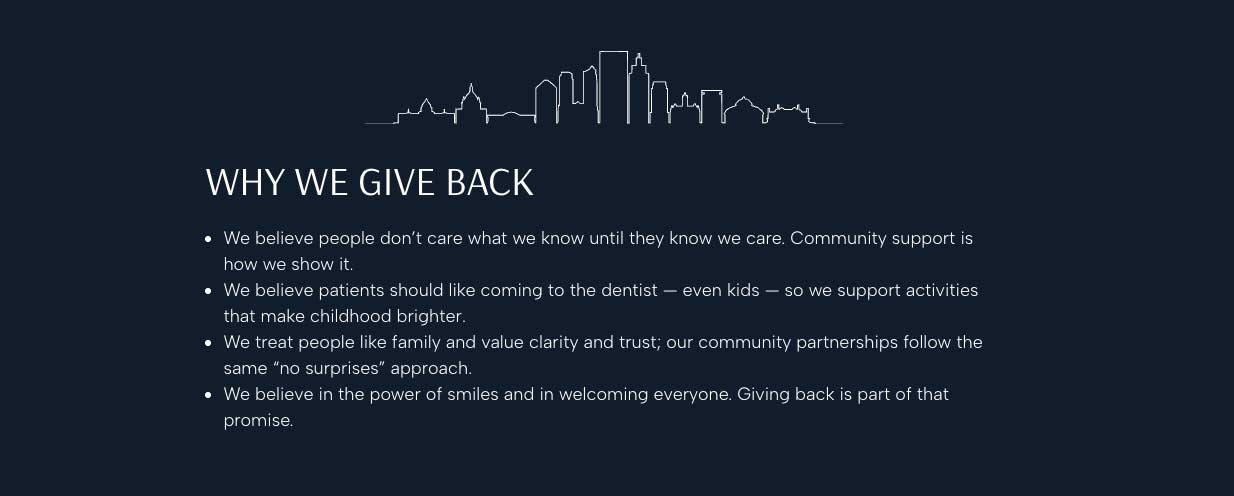
- Create a simple “In the community” section on your homepage with 2–3 photos and a short caption.
- Highlight 1–2 consistent commitments: school sponsorships, local charity drives, free days of dentistry, sports teams.
- Add proof: photos, logos, event names, and dates (keep it real, not braggy).
- Tie it back to your values in one sentence: why you do it, who you serve.
- Refresh it quarterly so it doesn’t look like a one-time effort.
26. AI-optimized content & Generative Engine Optimization (GEO)
This is not about writing “for robots.” It’s about making your best info clear, structured, and trustworthy so Google, AI overviews, and patients can all pull the right message fast.
Why it matters
- AI-driven search results pull snippets from pages that answer questions clearly and show real credibility.
- Well-structured content helps you show up in richer results, not just blue links.
- When fewer clicks are available, the clicks you do get are more valuable, and your content has to convert.
How to do it
- Write in a question-and-answer style on key pages (pricing, Invisalign, implants, emergencies, “what to expect”).
- Use clean heading structure (H2s and H3s that match real patient questions).
- Add FAQ sections to your top service pages, then apply FAQ schema where it makes sense.
- Strengthen trust signals: doctor bios, credentials, associations, years in practice, awards, reviews, and real photos.
- Keep core pages updated. AI tools favor pages that look current and maintained.
- Add internal links between related topics (services → FAQs → financing → testimonials), so both users and search engines can follow the story.
Are you settling for a website that doesn’t convert?
Patients decide fast. They want to feel confident and clear on what happens next. A strong website does that in seconds.
If you’d like help turning your website into a true booking engine, we’d love to help.
FAQ
What’s the most important feature for a dental website in 2026?
How do I make my dental website stand out from competitors?
How do I optimize my website for AI and Google?
Keep Reading

20 Best Dental Websites of 2026
We’re showcasing the very best dental websites of 2026. See examples of great dental websites from around the country, learn about the best features of each, and discover opportunities to improve your dental website design.

Why Original Photos Matter
Authentic photos help your dental website build trust and improve conversions. Learn why real imagery outperforms stock and how to capture better visuals.

What Does It Really Mean for Your Dental Website to Be AI Optimized?
Discover what it means to have an AI-optimized dental website. Learn how AI-friendly SEO, schema, content, and trust signals keep your practice visible.

Is Your Dental Website Hosting Helping or Hurting Your Growth?
Digital MarketingIs Your Dental Website Hosting Helping or Hurting Your Growth?Your website should work for you, not against you. Learn...

Patients
Book your free intro call
Stop wasting marketing dollars! We’re ready to maximize success across your dental marketing efforts. Get your free consultation on targeting the right patients at the right cost. :Delmain’s plug-and-play marketing system is built for dentists, allowing you to predict, plan, and expand effortlessly.